


If you have ever finished a car audio installation only to hear hiss, weak bass, channel imbalance, or distortion during a road test, you already know the real cost of “testing by ear.” The issue is not only sound quality. It is time, labor, customer trust, and repeated troubleshooting. This is exactly where Car Audio Test Equipment becomes essential. Instead of guessing, technicians can verify signal integrity, output behavior, and acoustic response before delivery.
In this article, I will break down the most common customer pain points, explain what a practical testing setup should cover, and show how professional workflows help teams work faster with fewer callbacks. I will also explain how manufacturers and buyers can evaluate product suitability when sourcing Car Audio Test Equipment for different business scenarios.
Article Summary
This guide explains why Car Audio Test Equipment is critical for diagnosing hidden issues in car audio systems, improving tuning consistency, and reducing after-sales complaints. It covers what to test, how to test it, and how to choose the right equipment for workshops, installers, brands, and distributors. You will also find a comparison table, a practical testing workflow, and an FAQ section to help you make better purchasing and operational decisions.
Table of Contents
- Article Outline
- Why Do Installers and Buyers Struggle Without Proper Testing?
- What Should Car Audio Test Equipment Actually Measure?
- What Is a Reliable Testing Workflow Before Delivery?
- How Should You Choose Car Audio Test Equipment for Your Business?
- Which Mistakes Cause Rework Even When the Install Looks Perfect?
- FAQ
- Conclusion and Next Step
Article Outline
- Identify real customer pain points in car audio installation and product testing.
- Define the core measurements needed to evaluate system performance correctly.
- Build a repeatable pre-delivery testing process for workshops and production teams.
- Match equipment choices to your business model, budget, and technical goals.
- Avoid common operational mistakes that increase returns, complaints, and tuning inconsistency.
- Answer common buyer questions about usage, training, and purchasing priorities.
Why Do Installers and Buyers Struggle Without Proper Testing?
Many teams still rely heavily on listening tests. Listening is important, but it is not enough on its own. The problem is that human hearing is influenced by environment, fatigue, music source quality, road noise, and personal preference. A system may sound “good enough” in the workshop and still fail in real use conditions.
Common pain points that lead people to invest in Car Audio Test Equipment:
- Repeated rework after installation: Technicians must reopen trims and wiring paths because an issue appears only after road vibration or volume increase.
- Unclear root cause: Is the noise from grounding, head unit output, amplifier gain, speaker impedance mismatch, or cable routing? Without measurement, troubleshooting becomes slow and expensive.
- Inconsistent tuning results: Different technicians may produce very different outcomes on the same vehicle model.
- Customer complaints about distortion: Many distortion problems occur before the customer reaches “high volume”; they are often gain-structure issues, not product defects.
- Difficult product evaluation: Distributors and brands need a way to compare batches or validate supplier claims before committing to larger orders.
- Poor documentation: When there is no test record, it is harder to prove system condition at delivery.
A structured testing process supported by Car Audio Test Equipment helps teams move from “maybe fixed” to “verified and documented.” That shift matters because customers do not pay only for parts—they pay for confidence.
What Should Car Audio Test Equipment Actually Measure?
Buyers often ask a simple question: “What functions do we really need?” The answer depends on your use case, but there are several core checks that repeatedly solve real-world problems. Good Car Audio Test Equipment should help you confirm electrical behavior, signal quality, and system-level performance in a repeatable way.
| Test Focus | Why It Matters | Typical Problem It Helps Identify |
|---|---|---|
| Signal Presence and Channel Routing | Confirms left/right/front/rear channels are connected correctly and output exists where expected. | Swapped channels, dead output, phase confusion after installation. |
| Output Level / Gain Structure | Prevents clipping and protects speakers while improving usable volume range. | Early distortion, low volume, harsh sound caused by improper gain staging. |
| Impedance / Load Behavior | Helps verify wiring configuration and amplifier compatibility. | Amplifier overheating, shutdown, unstable output, underperformance. |
| Frequency Response | Shows how the system behaves across low, mid, and high frequencies. | Bass holes, harsh treble peaks, missing vocal range, uneven tonal balance. |
| Distortion / Noise Diagnosis | Distinguishes between tuning issues, wiring problems, and component defects. | Hiss, buzz, clipping, alternator noise, signal contamination. |
| Acoustic Verification in Vehicle Cabin | Confirms performance under real installation conditions, not just bench tests. | Unexpected cabin resonance, weak imaging, poor subwoofer integration. |
The strongest setups combine electrical testing and in-vehicle acoustic verification. That is why many professional teams treat Car Audio Test Equipment as a workflow tool, not just a single instrument.
Another important point: the goal is not to chase lab-level perfection for every retail install. The goal is to detect problems early, tune more efficiently, and deliver stable quality across jobs. Even a compact setup can dramatically improve decision-making if used consistently.
What Is a Reliable Testing Workflow Before Delivery?
A good process saves more money than a long feature list. Teams that buy Car Audio Test Equipment but do not build a repeatable test routine often fail to get the full benefit. Below is a practical pre-delivery workflow that many workshops can adapt.
-
Start with a visual and wiring check.
Confirm polarity, terminal tightness, fuse condition, amplifier mounting, cable routing, and grounding points. Testing is faster when obvious installation mistakes are eliminated first. -
Verify signal path and channel mapping.
Check that each channel outputs correctly and matches the intended speaker position. This prevents embarrassing delivery issues like reversed channels or silent tweeters. -
Set gain structure before final tuning.
Measure source output and amplifier behavior to reduce clipping risk. Many “bad speaker” complaints are actually gain-setting problems. -
Run frequency and response checks.
Identify peaks, dips, or crossover mismatch before making subjective tuning decisions. This step helps technicians make faster and more consistent adjustments. -
Check noise under real operating conditions.
Test with engine on and off, lights and accessories active, and different input sources. This is where grounding and interference issues often show up. -
Perform a short road verification and final record.
Save or note key measurements and tuning settings. A basic report can protect your team during after-sales communication and helps future service work.
How Should You Choose Car Audio Test Equipment for Your Business?
Not every buyer needs the same solution. A retail workshop, a distributor, and a product development team will use Car Audio Test Equipment very differently. Before comparing products, define your primary goal: installation quality control, product inspection, tuning support, training, or incoming batch verification.
Use-case-based selection checklist:
- For car audio workshops: Prioritize ease of use, speed, durability, and repeatable daily workflows.
- For distributors: Prioritize consistency checks, batch comparison support, and demonstration value for customers.
- For brands/OEM/ODM buyers: Prioritize validation capability, documentation, and compatibility with internal QC procedures.
- For training centers: Prioritize clear interfaces and tools that help beginners understand cause-and-effect in tuning.
When discussing options with a supplier, ask practical questions instead of only asking for “best price.” For example: How quickly can a technician complete a standard test? What kind of measurements can be documented? Is the unit suitable for field use? How easy is it to train new staff? These questions reveal long-term value.
If you are sourcing from an experienced automotive audio manufacturer, it can be useful to evaluate their broader product ecosystem and production background as part of the decision process. In that context, Guangzhou Nisson Automobile Products Co., Ltd. is a name many buyers consider when looking for automotive audio-related products and testing solutions for professional use. The key is to match the equipment capabilities with your business workflow, not to buy features you will never use.
| Buyer Type | Main Priority | Recommended Purchasing Focus |
|---|---|---|
| Retail Installer / Workshop | Fast diagnosis and reduced callbacks | User-friendly interface, quick setup, core electrical + acoustic checks |
| Distributor / Reseller | Product comparison and customer demos | Stable repeatability, portable testing support, presentation-friendly outputs |
| Brand / OEM / ODM Buyer | Incoming QC and technical validation | Measurement consistency, documentation process, compatibility with QC standards |
| Training Center | Teaching efficiency | Clear indicators, easy-to-understand test logic, durable daily use design |
Which Mistakes Cause Rework Even When the Install Looks Perfect?
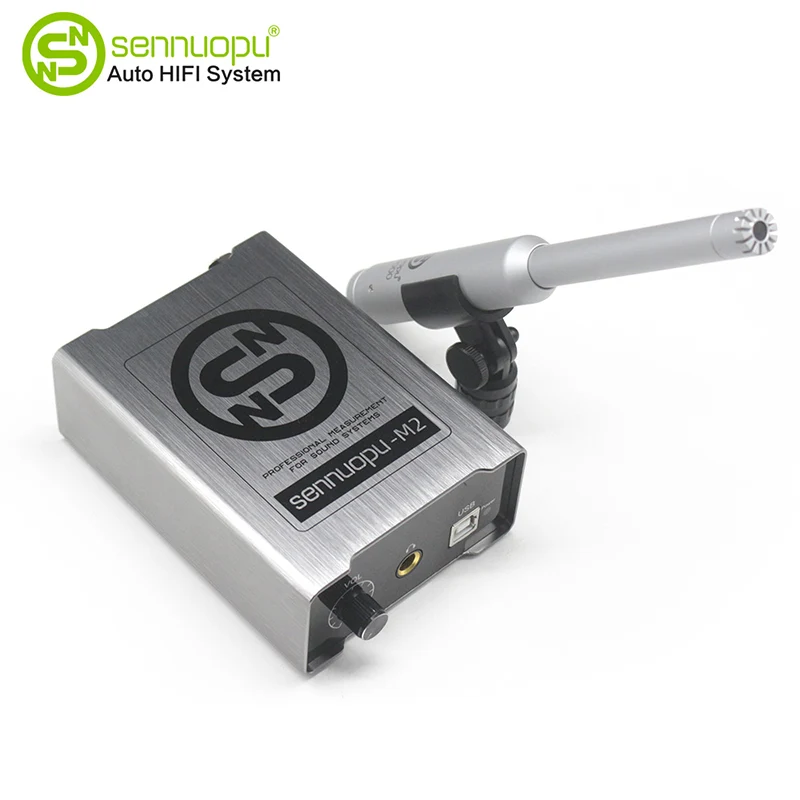
This is the part many teams learn the hard way. A clean install does not always mean a reliable result. Rework often comes from process gaps, not from product failure. Using Car Audio Test Equipment correctly helps, but only if the team avoids these common mistakes:
- Skipping engine-on testing: Noise and voltage-related issues may not appear during a quiet workshop test.
- Tuning before gain verification: You can waste a lot of time “correcting” problems caused by clipping or improper input levels.
- No baseline record: Without a basic pre/post comparison, troubleshooting later becomes slow and subjective.
- Testing only one music source: Bluetooth, USB, and head unit sources may behave differently.
- Ignoring cabin acoustics: Bench-perfect settings may sound wrong inside the vehicle due to installation position and interior reflections.
- No standardized checklist for technicians: Skilled teams still produce inconsistent results if the process is not documented.
The strongest shops treat testing as part of installation—not as an optional final step. That mindset turns Car Audio Test Equipment from a “technical accessory” into a profit-protection tool.
FAQ
Q1: Is Car Audio Test Equipment only necessary for large workshops?
No. Even small workshops benefit because the biggest savings often come from avoiding one or two repeat jobs per month. A compact testing setup can improve diagnosis speed, reduce guesswork, and help less experienced technicians work more consistently.
Q2: Can listening tests replace instrument testing?
Listening tests are valuable, but they should complement measurement, not replace it. Human hearing is subjective and affected by environment and fatigue. Instrument testing gives you a reliable baseline, while listening helps with final tuning preferences.
Q3: What is the most common issue found during pre-delivery testing?
Many teams frequently encounter gain-related distortion, grounding noise, or channel/polarity mistakes. These issues may not be obvious during installation but can become very noticeable when volume increases or driving conditions change.
Q4: How often should a workshop use Car Audio Test Equipment?
Ideally, it should be used on every installation and major upgrade, especially before delivery. A standardized routine is more effective than occasional deep testing because it prevents small errors from becoming customer complaints.
Q5: What should buyers ask suppliers before purchasing?
Ask about real use cases, testing functions, operation difficulty, durability, documentation support, and how the equipment fits your workflow. The best choice is not always the one with the longest feature list; it is the one your team will actually use correctly every day.
Q6: Can Car Audio Test Equipment help with customer trust and after-sales service?
Yes. When you can verify and record test results, communication becomes easier and more professional. It helps customers understand what was checked and gives your team a stronger reference point if future service is needed.
Conclusion and Next Step
Customers rarely describe technical issues in technical language. They say things like “the bass feels weak,” “the sound gets rough,” or “it was better yesterday.” Behind those complaints are measurable problems. That is why Car Audio Test Equipment matters: it helps your team identify causes faster, tune with confidence, and deliver results that stay consistent after the vehicle leaves the shop.
Whether you are a workshop owner trying to reduce rework, a distributor evaluating product consistency, or a brand building a stronger technical service image, the right testing workflow can improve efficiency and customer trust at the same time. The best purchase is not just a device—it is a solution that fits your real operating process.
Ready to upgrade your testing process and deliver more reliable car audio results?
If you are evaluating professional Car Audio Test Equipment for your workshop, distribution business, or brand project, now is the right time to compare practical options and choose a solution that matches your workflow.
Talk to the team, discuss your application needs, and contact us for product details, technical support, and a tailored recommendation.