News

How Can You Choose a Car Amplifier That Sounds Powerful Without Distortion?

2026-03-02 0 Leave me a message

Abstract
A car amplifier can be the difference between “loud but harsh” and “loud and clean.” The problem is that many buyers pick an amp by peak watt numbers, then end up with clipping, overheating, alternator whine, blown speakers, or a subwoofer that never really wakes up. This guide breaks down the specs that matter, shows how to match an amplifier to your speakers and sub(s), explains common amplifier types and setups, and gives practical installation and tuning steps you can actually follow. If you want clearer vocals, tighter bass, and a system that stays reliable in real driving conditions, start here.


Table of Contents


Outline

  • Clarify what an amplifier changes in a car audio system and why head units alone often fall short.
  • Learn the few specifications that predict real-world sound quality and reliability.
  • Match RMS power and impedance correctly to avoid distortion, speaker damage, and weak bass.
  • Choose the right channel configuration and amplifier class for your goals and space.
  • Plan wiring, fusing, grounding, and signal routing to prevent noise and protect your vehicle.
  • Set gain and filters the right way so your system gets louder without getting messy.
  • Troubleshoot common issues such as protect mode, alternator whine, and overheating.

Back to Table of Contents


What a Car Amplifier Really Does

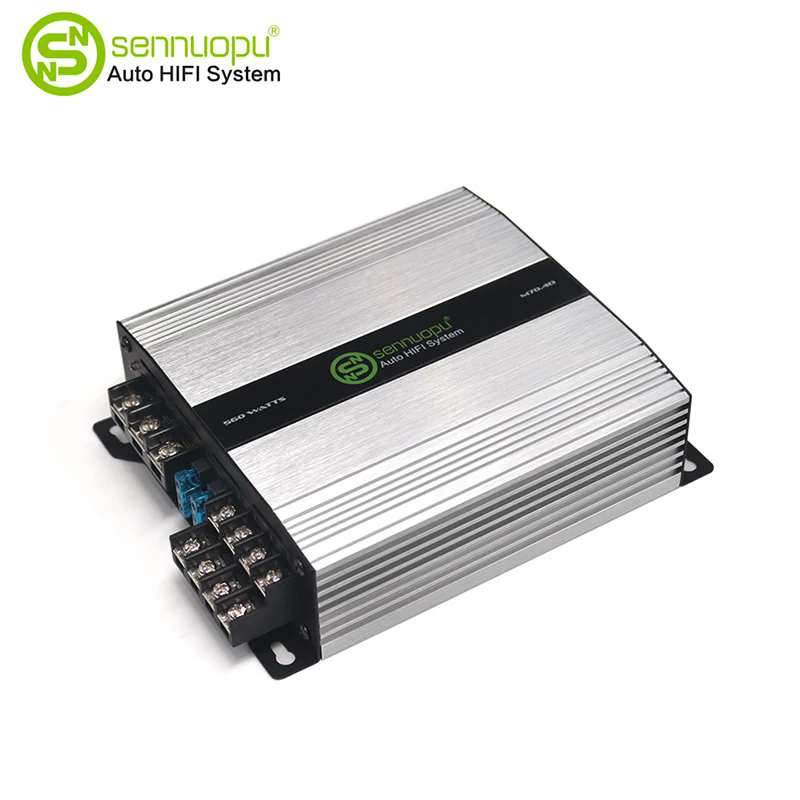
Car Amplifier

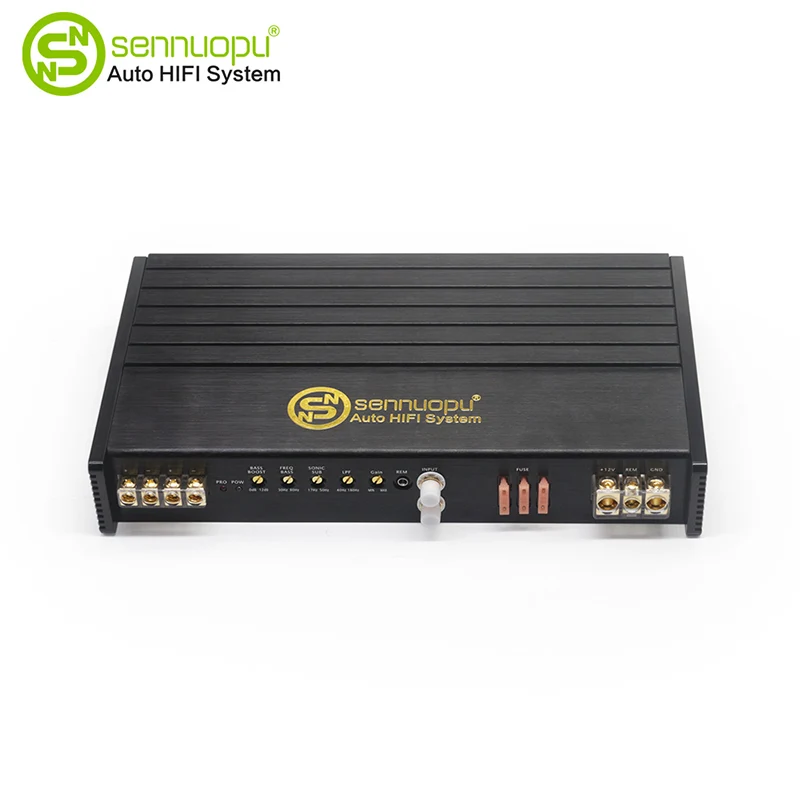
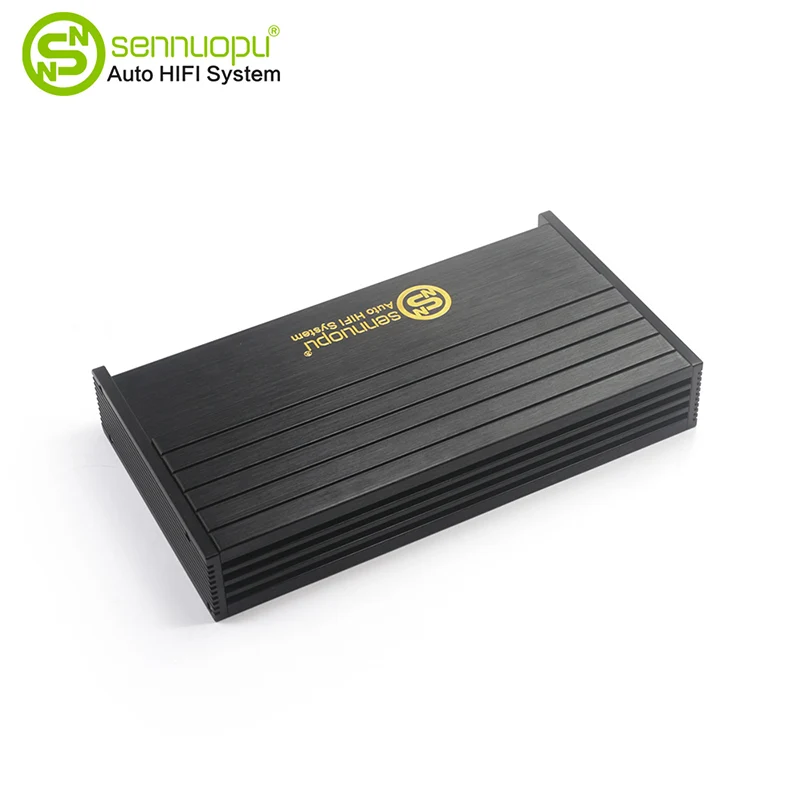
A car amplifier is not just a “volume booster.” Its main job is to provide stable, controlled power so your speakers and subwoofers can reproduce music cleanly—especially when the car cabin is noisy and you want real dynamics. Most factory head units and many aftermarket head units can play music, but they usually cannot supply enough clean current for demanding bass hits or higher volumes without distortion.

When a system runs out of clean power, you hear it as harshness, “fuzzy” bass, sizzling vocals, or a flat soundstage that collapses when the song gets busy. A proper Car Amplifier increases headroom, keeps transients crisp, and improves control over the speaker cone (often experienced as tighter bass and clearer midrange). The goal is not maximum loudness at any cost—it’s loudness that stays clean.

Back to Table of Contents


Key Specs That Matter in Daily Use

Specs can be confusing because marketing highlights big numbers that are easy to print on a box. Focus on what predicts the sound you’ll get and how the amp behaves in a hot car after an hour of driving.

  • RMS Power (continuous): This is the practical power rating. Ignore “max/peak” numbers for decision-making.
  • Impedance stability (Ohms): An amp must be rated to run safely at the load you plan (for example, 2Ω or 1Ω on sub amps). Lower impedance draws more current and creates more heat.
  • Total Harmonic Distortion (THD): Lower is generally cleaner, but real-world tuning matters more than tiny spec differences.
  • Signal-to-Noise Ratio (SNR): Higher can mean a quieter background, especially noticeable during soft passages.
  • High-pass and low-pass filters: Built-in crossovers help protect speakers and shape bass properly.
  • Input options: RCA inputs for aftermarket head units, and high-level inputs/line output converters for factory systems.
  • Protection and thermal design: A good amplifier should handle temperature swings, voltage drops, and short protection without constant shutdowns.

A quick reality check: A “bigger watt” amplifier is not automatically better. If you choose the wrong impedance load or set gain incorrectly, even a premium amp can clip. Clean power comes from correct matching and correct setup.

Back to Table of Contents


Matching an Amp to Speakers and Subwoofers

Most customer pain comes from mismatches—an amp that is too weak (clipping) or too strong (overdriving), wired to an impedance it can’t handle, or paired with speakers that aren’t designed for the power delivered.

  • Match RMS to RMS: Start with the speaker/sub RMS rating and target an amplifier RMS that is close to it, typically within about 75% to 125% for most builds.
  • Understand impedance: A speaker rated at 4Ω is not the same load as 2Ω. If you wire multiple speakers or dual voice coil subs, the final impedance changes. The amplifier must support that final load.
  • Plan headroom on purpose: Slightly more clean RMS power is often safer than too little power, because an underpowered amp pushed too hard clips and creates heat in the speaker voice coil.
  • Mind sensitivity: A high-sensitivity speaker can get loud with less power; a low-sensitivity speaker may need more power to reach the same level.

Example matching logic: If your subwoofer is rated 500W RMS and can be wired to 2Ω, choose a mono amplifier that delivers around 500W RMS at 2Ω. Then tune gain using a clean reference signal and conservative settings so you stay out of clipping during daily driving.

Common mismatch mistakes

  • Buying based on peak watts and ignoring RMS.
  • Wiring a sub to 1Ω on an amp only stable at 2Ω, causing protect mode or overheating.
  • Running door speakers full-range with no high-pass filter, forcing them to play bass they can’t handle.
  • Setting gain like it’s a volume knob, which is the fastest path to distortion.

Back to Table of Contents


Choosing Channels and Amplifier Class

The “right” amplifier is mostly about your system layout and goals. Decide what you want to power now and what you might add later.

  • Mono (1-channel): Best for subwoofers. Strong low-frequency power and typically optimized for bass loads.
  • 2-channel: Great for front stage (left/right) or bridging to a single sub if the amp supports it.
  • 4-channel: Common for powering front and rear speakers, or front speakers plus a bridged sub channel pair.
  • 5-channel: A space-saving “all-in-one” that powers four speakers plus a subwoofer from one chassis.

Amplifier class in practical terms

  • Class AB: Often favored for full-range clarity and smoothness. Usually runs warmer and can be less compact for the same power.
  • Class D: Very efficient, usually smaller, and excellent for subwoofer duty. Modern Class D designs can also sound great on full range when built well and tuned correctly.

If your pain point is “I want more bass without losing clarity,” a common solution is a dedicated mono amp for the sub plus a 4-channel (or a 5-channel) for speakers. If your pain point is “I want cleaner vocals and louder mids,” a high-quality 4-channel for the front stage is often the best first upgrade.

Back to Table of Contents


Installation Planning and Safety

Even the best amplifier will disappoint if installation is sloppy. Noise issues, random shutdowns, and weak output often come from wiring, grounding, and signal routing—not the amplifier itself.

  • Power wire gauge: Choose proper wire size for your amplifier’s current draw and cable length. Too thin causes voltage drop and heat.
  • Fuse placement: Install a fuse near the battery on the main power line. This protects your vehicle in case of a short.
  • Grounding: Use a short, solid ground to bare metal. A poor ground is a top cause of alternator whine and protect mode.
  • Signal routing: Keep RCA/signal wires away from power wires when possible to reduce noise pickup.
  • Ventilation: Mount the amp where it can breathe. Heat is the enemy of consistent performance.
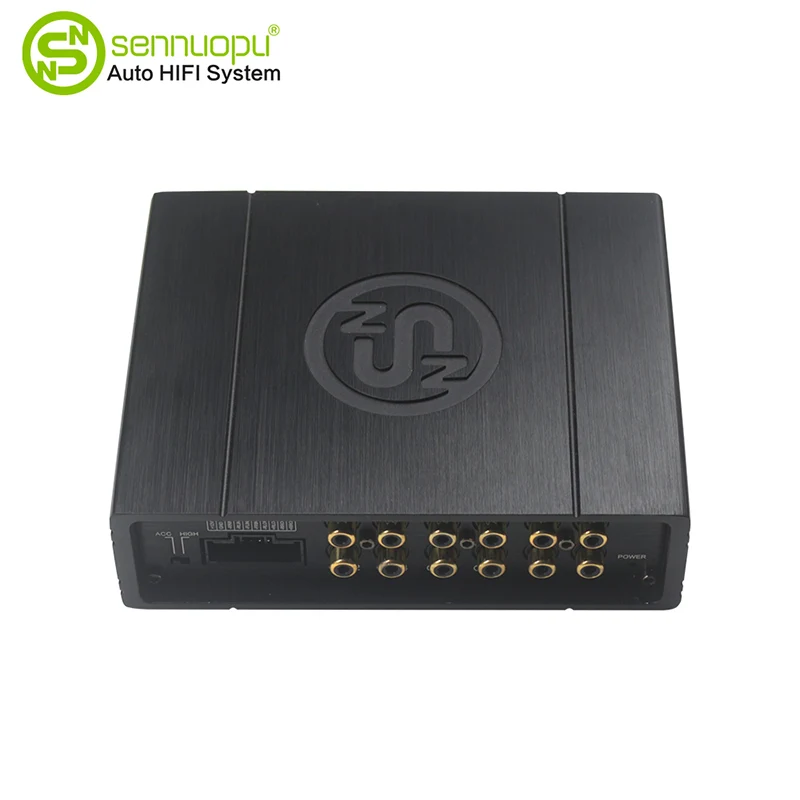
  • Factory integration: If keeping a factory head unit, confirm whether you need high-level inputs, a line output converter, or remote turn-on solutions.

Safety note: If you are not comfortable working around vehicle electrical systems, have a professional installer handle power runs and fusing. It’s not about skill pride—it’s about preventing electrical damage.

Many buyers want a smoother purchase and setup experience rather than “guess and hope.” That’s why manufacturers and suppliers who provide clear specifications, wiring guidance, and application support matter. Guangzhou Nisson Automobile Products Co., Ltd. supports customers who want a Car Amplifier solution that fits their vehicle setup and performance targets without trial-and-error.

Back to Table of Contents


Tuning for Clean, Loud Sound

Tuning is where “good hardware” turns into “great sound.” The biggest pain point is distortion at higher volume, and the fix is usually gain structure and filtering.

  • Set head unit volume first: Choose a sensible max listening volume on the head unit that is clean and repeatable.
  • Use gain to match signal, not to add loudness: Increase gain only until the amplifier reaches the desired output without clipping.
  • High-pass filter for door speakers: This removes deep bass that small speakers cannot play cleanly, improving clarity and protecting them.
  • Low-pass filter for subwoofer: This keeps vocals and midrange out of the sub, making bass feel tighter and more “in the right place.”
  • Phase and polarity checks: Incorrect polarity can kill midbass impact and make the system sound hollow.

Signs you’re clipping (and should back off): harshness that appears suddenly, bass that turns into a “paper tearing” sound, speakers that smell hot, or an amp that goes into protect during loud passages.

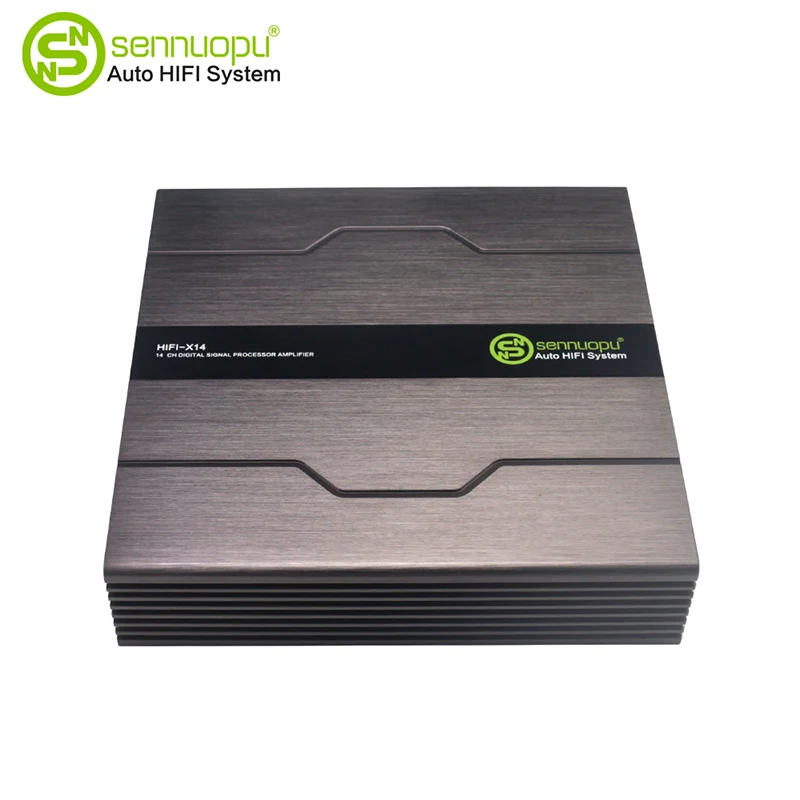
If you want maximum results, consider adding a DSP or using a head unit with time alignment and EQ. But even without extra gear, correct gain and crossover settings usually deliver the biggest “wow” improvement.

Back to Table of Contents


Fixing Common Problems Fast

Here are the issues that show up most often after buying a Car Amplifier—and what usually fixes them.

  • Alternator whine: Re-check ground point, keep signal and power wires separated, confirm RCA quality, and ensure head unit/LOC grounding is correct.
  • Amp goes into protect mode: Verify speaker wiring, final impedance, short circuits, overheating from poor ventilation, or power/ground connection quality.
  • Weak bass: Confirm sub wiring impedance, correct low-pass filter, proper gain setup, and sub polarity/phase.
  • Distortion at moderate volume: Reduce gain, set high-pass on speakers, confirm source signal is not already distorted, and check that speakers aren’t damaged.
  • Random shutdowns: Look for voltage drop (wire gauge too small), loose connections, or thermal issues due to mounting location.

A helpful habit is to change only one variable at a time when troubleshooting. It prevents you from “fixing” one problem while accidentally creating another.

Back to Table of Contents


Comparison Table of Popular Amplifier Setups

Car Amplifier

Setup Best For Pros Watch Outs
4-Channel Amp for Speakers Only Cleaner vocals, louder front stage Simple upgrade, clear improvement in dynamics Set high-pass to protect speakers from deep bass
Mono Amp for Subwoofer Only Stronger, tighter bass Big low-end gain without changing the front stage Impedance wiring must match amp stability
4-Channel + Mono (Two-Amplifier System) Balanced sound plus real bass Most flexible, easy to tune each section More wiring and space, plan power distribution
5-Channel Amp All-in-one builds, limited space Clean installation, fewer components Confirm sub channel RMS meets your bass goals
2-Channel Bridged to Sub Budget sub upgrade Works when you already have a 2-channel amp Bridging changes load requirements and heat

Back to Table of Contents


FAQ

Do I need a car amplifier if my head unit already gets loud?
If “loud” also means harsh or flat, an amplifier helps because it delivers cleaner power with more control. Many systems sound louder simply because they become cleaner and less compressed.

Is more RMS power always better?
Not automatically. Correct matching and tuning matter more than raw power. Too much power with poor gain settings can damage speakers; too little power pushed hard can clip and also damage speakers.

Should I choose Class AB or Class D?
Both can sound excellent when designed and installed well. Class D is efficient and popular for subwoofers and compact installs; Class AB is often chosen for full-range speaker amplification. Your space, heat, and power goals usually decide.

What causes my amplifier to overheat?
Common causes include low-impedance wiring below the amp’s rating, poor ventilation, gain set too high, or inadequate power/ground wiring that stresses the amp.

How do I stop alternator whine?
Start with grounding: short ground cable, clean bare-metal contact, tight connections. Then check wire routing and signal cable quality. Noise is usually an installation issue, not a “bad amplifier” issue.

Can I keep my factory radio?
Yes. Many modern solutions support factory integration using high-level inputs or a line output converter. The key is choosing an amplifier compatible with your signal type and turn-on method.

Back to Table of Contents


Next Steps

If your goal is simple—cleaner volume, tighter bass, and fewer headaches—the winning formula is: pick the right RMS power, wire to a safe impedance, install with correct fusing and grounding, then tune gain and filters carefully. That’s how a Car Amplifier becomes a reliable daily upgrade instead of a weekend regret.

For customers who want product selection guidance, system matching, and practical support from inquiry to installation planning, Guangzhou Nisson Automobile Products Co., Ltd. provides Car Amplifier solutions designed for real driving conditions and real-world system integration.

Ready to build a cleaner, stronger car audio system? Contact us to discuss your vehicle, speakers/subwoofer plan, and power goals—we’ll help you choose a Car Amplifier setup that delivers the sound you want with the stability you need.

Related News
Leave me a message
X
We use cookies to offer you a better browsing experience, analyze site traffic and personalize content. By using this site, you agree to our use of cookies. Privacy Policy
Reject Accept