News

How Can a Car Amplifier Fix Weak, Distorted Sound in Your Vehicle?

2026-01-19 0 Leave me a message

Abstract

A Car Amplifier is one of the fastest ways to turn “loud but thin” audio into clean, controlled sound—especially when factory systems start distorting the moment you raise the volume. This guide breaks down what actually causes muddy bass, harsh highs, speaker blowouts, alternator whine, and overheating, then shows how to choose the right amplifier, size power wiring safely, and tune gain/crossovers so you get volume without damage. You’ll also find quick checklists, a comparison table, and a practical FAQ for real-world installation decisions.


Contents


Outline

  • Identify the real reasons your system distorts or sounds weak.
  • Learn what an amplifier improves (and what it can’t fix alone).
  • Compare amplifier classes and channel layouts with a clear table.
  • Pick amplifier power using practical RMS thinking and speaker goals.
  • Wire it safely to avoid noise, voltage drop, overheating, and shutdowns.
  • Tune gain and crossovers to protect speakers and improve clarity.
  • Troubleshoot the usual suspects: whine, popping, clipping, and heat.

Why Car Audio Breaks Down at Higher Volume

Most “bad sound” in a car isn’t caused by your speakers being terrible—it’s caused by the system running out of clean power. When you turn up the volume and it gets sharp, crunchy, or “flat,” that’s typically distortion from a weak amplifier stage (often built into the head unit or factory amplifier) being pushed beyond its comfortable range.

  • Distortion at medium/high volume: The signal clips when the source can’t provide clean voltage.
  • Weak bass even with bass boost: Bass boost often increases distortion faster than it increases usable bass.
  • Speakers “blowing” unexpectedly: Clipping can damage speakers even when power numbers don’t look extreme.
  • Soundstage collapses: Dynamics disappear; vocals get shouty; cymbals become splashy.
  • Noise (whine/hiss): Poor grounding, bad routing, or gain set too high exposes system noise.

A properly selected Car Amplifier solves these pain points by delivering stable power with headroom, giving you volume and clarity without the harsh edge that makes long drives fatiguing.


What a Car Amplifier Actually Does

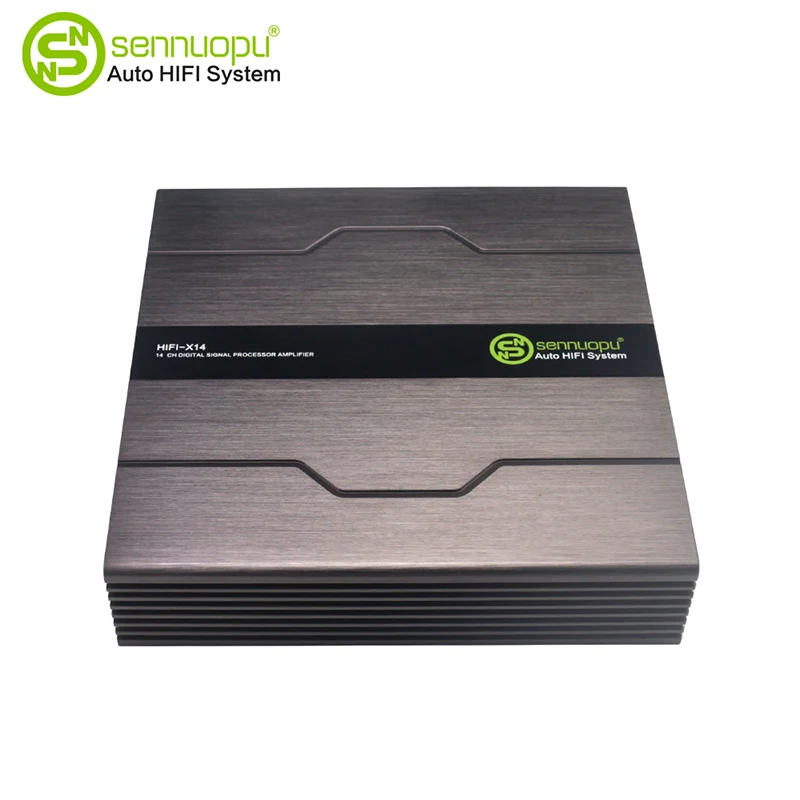
Car Amplifier

In plain terms, your audio signal needs enough controlled power to move speaker cones accurately. An amplifier’s job is to take the low-level audio signal and increase it cleanly so your speakers can produce dynamics—tight bass hits, clear vocals, and crisp detail—without the waveform flattening into distortion.

  • More headroom: Clean peaks instead of compressed, “shouting” sound.
  • Better control: Tighter bass and less “boom” when power delivery is stable.
  • Cleaner tuning tools: Proper crossovers and filters reduce strain on speakers.
  • System flexibility: Add a subwoofer, power component speakers, or run active setups later.

What it won’t magically fix: rattling door panels, poor speaker placement, or low-quality source audio. But it will make everything you already have behave more predictably—and that alone is a huge upgrade.


Amplifier Types That Matter in Real Installs

You don’t need a deep electronics lecture. You need the differences that affect heat, space, sound, and wiring. Here’s a practical comparison:

Type Typical Strength Trade-Off Best For
Class A/B Smooth, familiar sound character; solid full-range performance Runs warmer; usually larger footprint Front/rear speakers, component sets, balanced daily systems
Class D High efficiency; compact; strong output for size Heat management still matters if mounted tight Subwoofers, space-limited installs, multi-channel builds
Mono (1-channel) Optimized for bass loads Not intended for full-range speakers Subwoofer systems
4-channel One amp can power front + rear or front + bridged sub Power allocation needs planning Clean daily upgrades, small sub + front stage
5-channel All-in-one: speakers + subwoofer More wiring complexity; tuning matters Balanced “single amp does it all” solutions

How to Choose the Right Car Amplifier

If you want a purchase you won’t regret, decide based on goals and constraints—not just the biggest watt number on the box.

  • Goal 1: Clean loudness (daily driving, windows down) → prioritize stable RMS power and good protection features.
  • Goal 2: Strong bass (sub-focused) → consider a mono Class D with proper low-pass controls.
  • Goal 3: Better vocals and imaging (front stage) → a 2-channel or 4-channel with sensible crossover options.
  • Goal 4: Simple install → a 5-channel can reduce equipment clutter if tuned carefully.

Use RMS thinking, not “max power.” RMS ratings are the meaningful numbers for continuous performance. A good rule of thumb for daily systems is to choose an amplifier that can provide roughly the speaker’s RMS rating (or slightly above), then tune gain correctly so the speaker isn’t fed distortion.

Match impedance correctly. If your subwoofer is wired to a low impedance, your amplifier must be designed to handle that load reliably. Mismatches cause overheating, shutdowns, or worse.

Plan your space and airflow. A trunk side panel install needs different heat tolerance than under-seat mounting. If airflow is tight, efficiency matters more.

For buyers who want a supplier that understands real-world installation constraints, Guangzhou Nisson Automobile Products Co., Ltd. produces car audio solutions with a focus on practical usability—think stable operation, sensible controls, and the kind of build choices that reduce failures from heat and wiring mistakes in day-to-day driving.


Power, Ground, and Safety

A powerful amplifier is only as good as the electricity feeding it. Most “my amp sounds bad” problems are actually wiring problems.

  • Fuse the power wire close to the battery. This protects the vehicle if the wire ever shorts.
  • Use proper wire gauge. Undersized wire creates voltage drop → distortion, shutdowns, and heat.
  • Ground to bare metal. Paint is an insulator. A poor ground creates noise and unstable behavior.
  • Route power and signal separately. Keep power wire away from RCA/signal cables to reduce whine.
  • Secure connections. Loose terminals cause crackles, intermittent shutdown, and heat at the contact point.

If you’re nervous about wire gauge: don’t “hope it’s fine.” Choose thicker than you think you need. In cars, voltage drop is a real performance killer.


Tuning for Clean Sound (Gain, Crossovers, Filters)

Here’s the part most people skip—then wonder why the upgrade sounds harsh. Tuning is where the amplifier becomes your best friend instead of your most expensive mistake.

  • Set gain as a matching control, not a volume knob. Too much gain = noise and clipping.
  • High-pass your door speakers. Door speakers usually can’t handle deep bass at high volume. High-pass filtering protects them and improves clarity.
  • Low-pass your subwoofer. Let the sub do bass; let door speakers do mids and highs.
  • Avoid extreme bass boost. If you want more bass, improve the sub system or tuning—boosting too hard often adds distortion.

A simple tuning workflow:

  1. Set head unit EQ flat (no boosts), loudness off.
  2. Choose crossovers: high-pass for speakers, low-pass for sub.
  3. Raise head unit volume to a strong listening level (not maximum).
  4. Increase gain slowly until it’s loud and clear, then back off slightly.
  5. Listen for harshness (clipping), rattles (mechanical), and imbalance (staging).

If you want “loud but comfortable,” the magic is headroom plus careful gain—not brute force.


Common Problems and Fixes

Symptom Likely Cause Practical Fix
Alternator whine (rising with RPM) Poor ground, cable routing, gain too high Improve ground, separate power/signal runs, reduce gain, check RCA quality
Amp goes into protect / shuts off Overheating, low impedance load, loose wiring Check speaker wiring, confirm load, improve airflow, tighten terminals
Distortion even at moderate volume Clipping from source or gain set too high Lower gain, flatten EQ, reduce bass boost, confirm clean input signal
Weak bass after upgrade Incorrect crossover/phase, sub wiring issue Verify low-pass settings, check polarity, inspect sub enclosure and placement
Popping when turning on/off Remote turn-on timing or grounding Check remote wiring, confirm stable ground, consider turn-on delay solution

Buyer Checklist

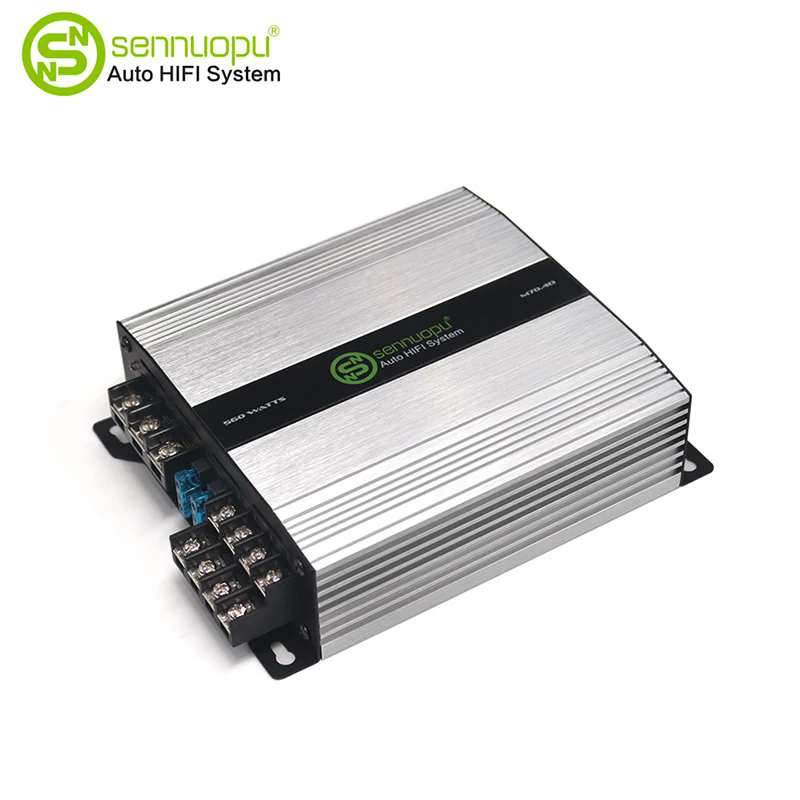
Car Amplifier

  • Channel plan: speakers only, sub only, or full system?
  • Power realism: prioritize RMS ratings and stable operation over “max” numbers.
  • Controls you’ll actually use: crossovers, input sensitivity, and protection behavior.
  • Install constraints: mounting space, airflow, and wiring path.
  • Noise prevention: grounding strategy and cable routing plan.
  • Support and documentation: clear guidance for wiring and tuning saves you hours.

FAQ

Q: Will a Car Amplifier make my factory speakers sound better?
A: In many cases, yes—especially by reducing distortion at higher volume. But if the speakers are physically low quality or already damaged, the improvement may be limited. The biggest upgrade you’ll notice is cleaner vocals and less harshness when you turn it up.

Q: Do I need a subwoofer if I add an amplifier?
A: Not necessarily. A 4-channel amplifier powering quality front speakers can be a huge improvement on its own. A subwoofer becomes worth it when you want deeper bass without forcing door speakers to do work they aren’t built for.

Q: Why did my sound get noisier after installing an amplifier?
A: Most noise issues come from grounding, cable routing, or gain being set too high. Fix the ground first (bare metal, tight connection), route signal away from power, and treat gain as matching—not “more volume.”

Q: What’s the safest way to avoid blowing speakers?
A: Use proper crossovers, avoid aggressive bass boost, and set gain so you’re not clipping. A clipped signal can damage speakers faster than many people expect.

Q: Can I mount an amplifier under a seat?
A: Often yes, but heat and airflow become critical. Choose an efficient design, mount securely, and make sure it can breathe. Avoid burying it under thick carpet or blocking vents.

Q: Is a 5-channel amp better than separate amps?
A: It depends. A 5-channel setup can be cleaner and simpler to install, but separate amps sometimes offer more flexibility and power. If you want one tidy system with fewer boxes, 5-channel is attractive—just tune carefully.


Final Thoughts

A Car Amplifier upgrade is less about “being louder” and more about finally getting sound that stays clean when you want to enjoy it. If you plan your channels, wire it safely, and tune gain/crossovers with intention, you’ll get tighter bass, clearer vocals, and less fatigue on long drives.

If you’re considering a reliable amplifier solution and want guidance that matches your vehicle, speakers, and space constraints, contact us at Guangzhou Nisson Automobile Products Co., Ltd.—we’ll help you choose a setup that sounds right and installs smoothly.

Related News
Leave me a message
X
We use cookies to offer you a better browsing experience, analyze site traffic and personalize content. By using this site, you agree to our use of cookies. Privacy Policy
Reject Accept