Whatsapp
Modern vehicle owners expect more than simply louder music. They want cleaner vocals, tighter bass, a wider soundstage, accurate instrument placement, and consistent performance across different listening positions. Achieving these results requires more than upgrading individual speakers. The amplifier and digital signal processor must work together to control power, frequency response, timing, and the acoustic characteristics of the vehicle.
An 8CH Amp And 10CH Hi-Res DSP combines multi-channel amplification with advanced digital signal processing in one audio architecture. This type of solution can provide multiple amplified outputs while giving installers additional DSP channels for detailed system configuration. The result is a more flexible platform for premium car audio upgrades, active speaker systems, and customized in-vehicle sound environments.
This guide explains how an 8CH Amp And 10CH Hi-Res DSP works, what the channel numbers mean, how DSP tuning improves the listening experience, what specifications matter during purchasing, and how a system such as the Sennuopu HIFI-K10 can fit into a modern automotive audio upgrade.
An 8CH Amp And 10CH Hi-Res DSP is an integrated automotive audio solution that combines two important functions: power amplification and digital audio processing. The "8CH Amp" portion refers to eight amplifier channels, while the "10CH DSP" portion provides ten digital signal processing channels.
These two functions solve different problems. The amplifier provides the electrical power needed to drive speakers, while the DSP controls and modifies the audio signal before it reaches the individual speakers.
This distinction is important because a powerful amplifier alone cannot automatically correct every acoustic problem inside a vehicle. The cabin contains glass, seats, dashboards, doors, carpets, plastics, and other surfaces that reflect and absorb sound differently. Speaker locations are also rarely symmetrical around the listener.
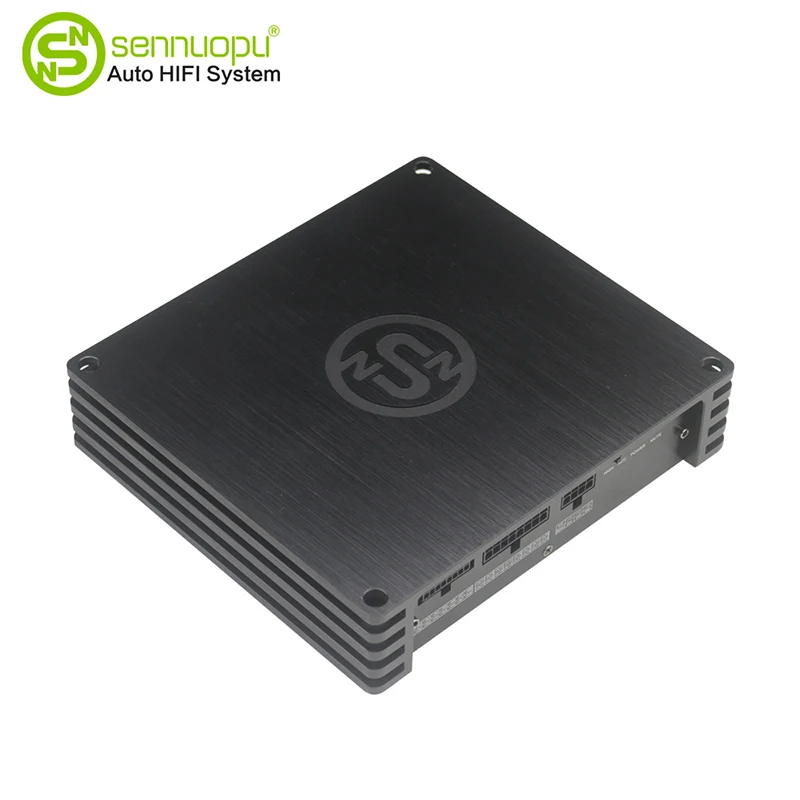
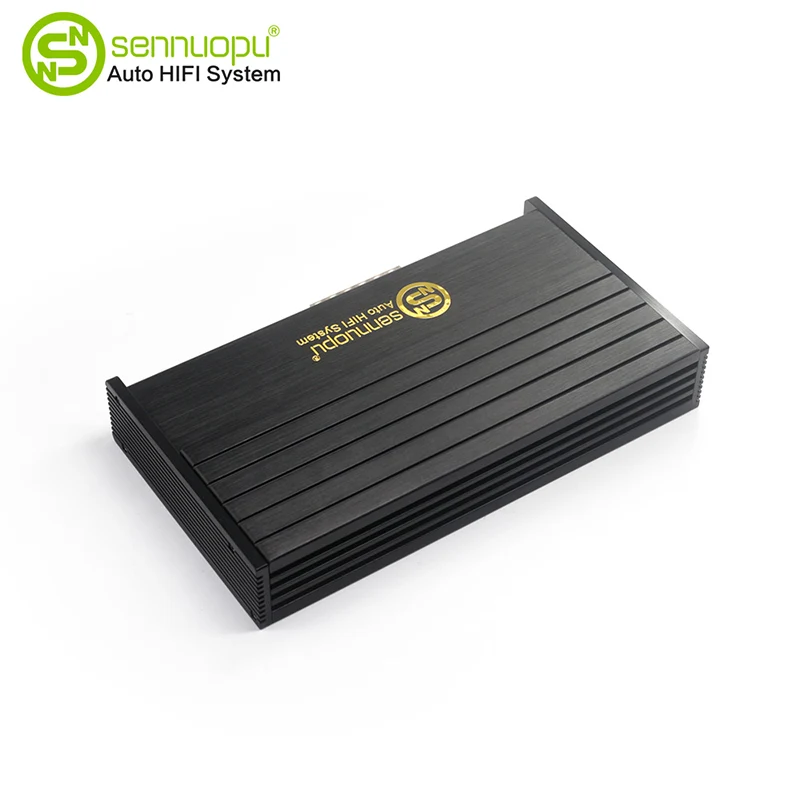
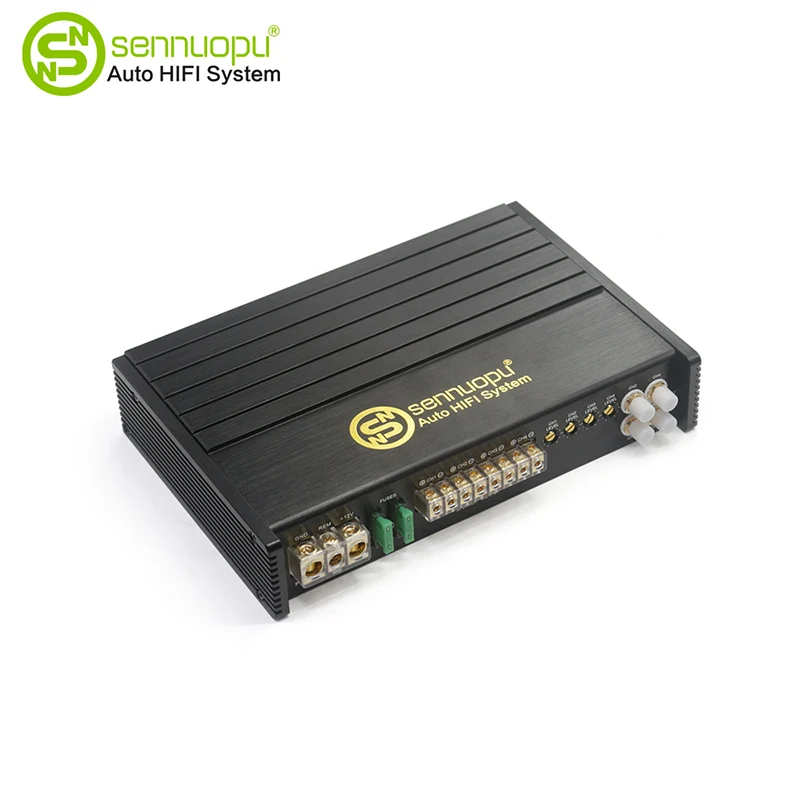
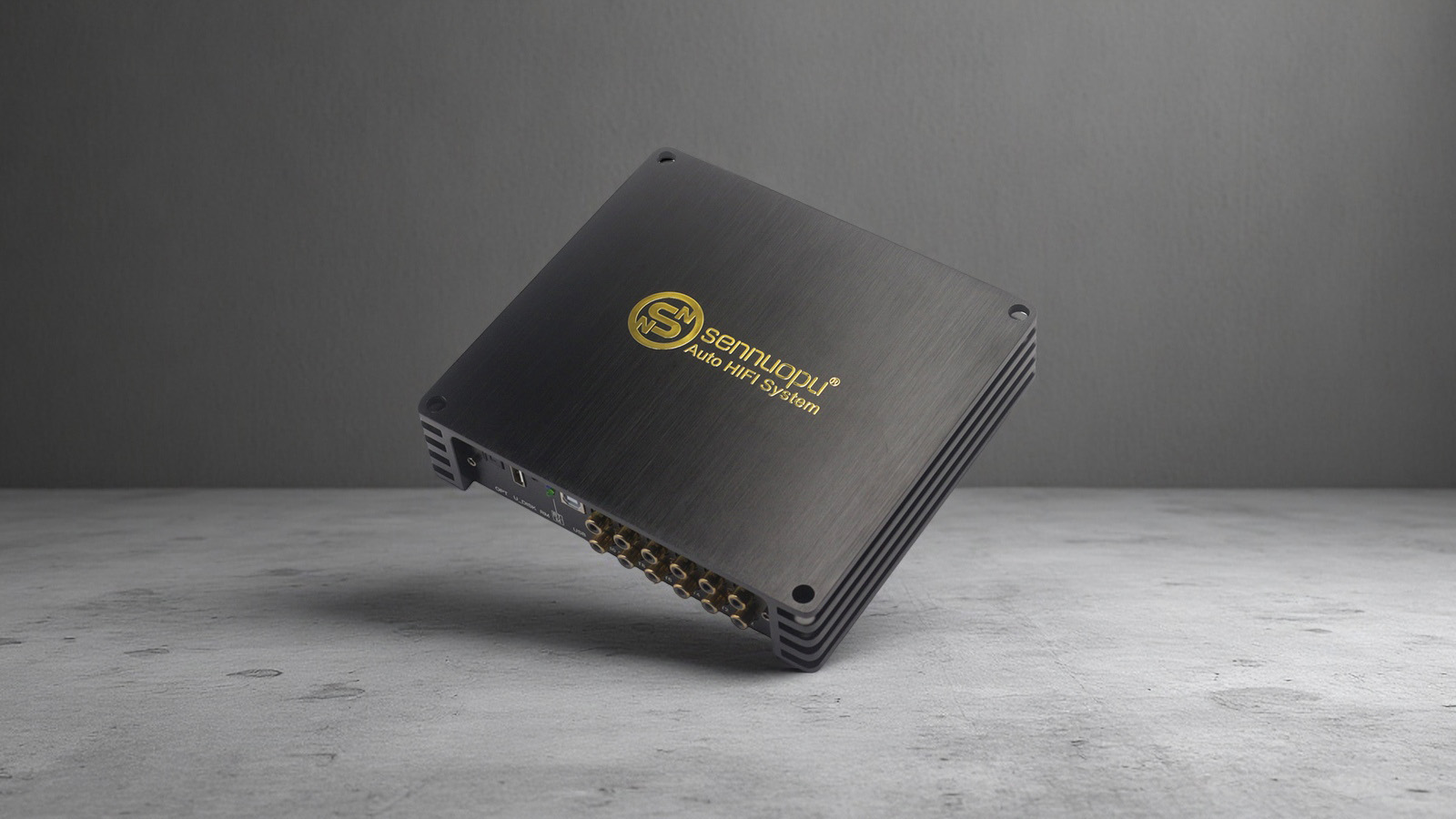
The Sennuopu HIFI-K10 is one example of this architecture. Its published product information describes an 8-channel Class D amplifier combined with a 10-channel DSP, supporting high-resolution processing and multiple audio input options.
The system begins by receiving an audio signal from a compatible source. Depending on the system configuration, the source may be the vehicle's original audio system, an optical connection, RCA source, USB playback, Bluetooth streaming, or another supported input.
The incoming signal is then processed digitally. The DSP can apply equalization, crossover filtering, time alignment, phase adjustment, and other tuning parameters before sending the processed signals toward the amplifier stages.
The amplifier subsequently converts the processed signal into sufficient electrical power to drive the connected speakers.
This architecture allows the installer to treat the vehicle's audio system as a complete acoustic environment instead of simply increasing amplifier power.
One of the biggest challenges in automotive audio is that the listening environment is physically uneven. The driver may be much closer to the left-side speaker than the passenger is to the right-side speaker. As a result, the same audio signal can arrive at different times and at different levels.
A DSP provides tools to compensate for these differences. Instead of sending identical signals to every speaker, the installer can create a more carefully controlled signal path for each part of the system.
Equalization can reduce unwanted peaks and help balance different frequency ranges.
Adjustable delay can compensate for different speaker-to-listener distances.
Different speakers can be assigned appropriate frequency ranges.
Phase-related problems can be investigated and adjusted during system tuning.
These controls become increasingly useful as the number of speakers grows. A basic two-channel setup may require relatively simple adjustments, while a multi-way automotive system can involve tweeters, midrange drivers, midbass speakers, rear speakers, and subwoofers.
Eight amplifier channels provide considerable flexibility for designing multi-speaker automotive systems. Instead of forcing multiple speakers to share a single amplified output, individual channels can be assigned to specific speaker groups or drivers when the system design supports it.
For example, a system may use separate channels for front tweeters, front midrange drivers, rear speakers, and additional low-frequency components. The exact channel allocation depends on the vehicle, speaker configuration, impedance, power requirements, and tuning strategy.
| Potential Speaker Role | Possible Channel Allocation | Main Purpose |
|---|---|---|
| Front Left Tweeter | 1 channel | High-frequency reproduction |
| Front Right Tweeter | 1 channel | High-frequency reproduction |
| Front Left Midrange | 1 channel | Vocal and mid-frequency detail |
| Front Right Midrange | 1 channel | Vocal and mid-frequency detail |
| Front Left Midbass | 1 channel | Low-mid frequency reproduction |
| Front Right Midbass | 1 channel | Low-mid frequency reproduction |
| Rear Speakers | 2 channels | Rear fill and overall cabin coverage |
This is only an example architecture. Actual installation should be based on the vehicle's speaker configuration and the electrical requirements of each connected driver.
Ten DSP channels provide a larger processing architecture than a basic multi-channel processor. This additional capacity can be useful when an installer needs independent control of more speaker outputs than the amplifier itself provides.
The additional DSP channels can also support system expansion or more advanced signal-routing strategies, depending on the processor's internal architecture and available outputs.
The HIFI-K10 product information specifies 31-band EQ adjustment. A multi-band equalizer gives the installer more control over the tonal balance of the system than a simple bass-and-treble adjustment.
For example, if measurements or listening tests reveal an excessive peak within a particular frequency region, that region can be adjusted without necessarily changing the entire frequency spectrum.
Advanced DSP systems can allow individual channels to be adjusted for parameters such as EQ, crossover frequency, slope, phase, and delay. This makes it possible to develop a tuning profile around the specific vehicle and speaker configuration.
High-resolution digital processing is important because DSP operations depend on how accurately the digital system represents and processes an audio signal.
The HIFI-K10 is specified with a 32-bit DSP architecture, a 294 MHz processing rate, and support for sampling rates up to 192 kHz. These specifications indicate a processing platform designed for detailed digital audio management.
However, a high numerical specification does not automatically guarantee a perfect listening experience. The complete signal chain still matters. Source quality, amplifier design, speaker performance, vehicle acoustics, installation, power supply stability, and tuning all influence the final result.
| Specification | HIFI-K10 Published Information | Why It Matters |
|---|---|---|
| Amplifier Channels | 8 channels | Supports multi-channel speaker system design. |
| DSP Channels | 10 channels | Provides additional signal processing flexibility. |
| Amplifier Type | Class D | Designed for efficient power amplification. |
| Output Power | 100 W/channel published specification | Provides substantial power for compatible speaker configurations. |
| DSP Architecture | ADAU1452, 294 MHz | Provides a high-performance digital processing platform. |
| Sampling Rate | Up to 192 kHz | Supports high-resolution digital audio processing. |
| Equalization | 31-band EQ | Allows detailed tonal adjustment. |
| Connectivity | OTG, Bluetooth, USB, optical and other inputs | Provides flexibility for different source configurations. |
Buyers should look beyond the channel count when evaluating a professional automotive DSP amplifier. A system may have an impressive specification sheet but still be unsuitable for a particular vehicle if its input, output, power, control, or installation requirements do not match.
Check the rated output power and the conditions under which the rating is specified. Speaker impedance, supply voltage, distortion level, and measurement method can all affect the interpretation of power ratings.
Look at the number of DSP channels, available EQ bands, crossover functions, delay adjustment, phase control, routing options, and software interface.
The amplifier should integrate with the vehicle's existing audio architecture. High-level inputs can be useful for factory systems, while RCA, optical, USB, Bluetooth, or OTG connections may support different aftermarket source configurations.
Automotive electronics operate in environments with temperature fluctuations and limited installation space. Heat dissipation should therefore be considered when choosing an amplifier.
A powerful DSP is only useful if installers can configure it accurately. The tuning interface should be practical, stable, and easy to understand.
This type of system can support a wide range of automotive audio upgrade projects. Its greatest value appears in installations where the number of speakers and the required level of tuning exceed the capabilities of a simple amplifier.
DSP tuning should be treated as a structured process rather than simply increasing bass or treble until the music sounds louder.
Before making DSP adjustments, verify speaker polarity, wiring, mounting, amplifier gain, and signal routing. Incorrect wiring can create problems that software adjustments cannot properly solve.
Each speaker should operate within a frequency range suitable for its design. Crossovers help prevent a driver from receiving frequencies that it is not intended to reproduce.
Measure the distance from the main listening position to each speaker. Appropriate delay settings can help compensate for different propagation times and improve the perceived position of vocals and instruments.
EQ should solve measurable or clearly identifiable response problems rather than being used excessively. Large boosts can consume amplifier headroom and may increase the risk of distortion.
A system that sounds excellent at low volume may behave differently at higher output levels. Tuning should therefore consider realistic listening conditions and the capabilities of the connected speakers.
A multi-channel DSP amplifier should be integrated into the vehicle with attention to electrical, thermal, acoustic, and physical requirements.
Installation requirements can vary significantly between vehicles. Professional installers should follow the manufacturer's documentation and the vehicle-specific wiring requirements rather than relying on a universal connection method.
| Common Problem | Potential Cause | How DSP Can Help |
|---|---|---|
| Vocals sound too far to one side | Different speaker distances and levels | Time alignment and level adjustment |
| Bass sounds weak | Speaker interaction, crossover or phase issues | Crossover, phase and EQ adjustment |
| Sound is harsh | Uneven high-frequency response | Fine EQ adjustment |
| Vocals lack clarity | Frequency overlap or poor system balance | Frequency division and tonal adjustment |
| Rear speakers dominate | Incorrect output levels or tuning | Independent channel level adjustment |
| Subwoofer does not blend naturally | Crossover, phase or delay mismatch | DSP crossover, phase and time adjustment |
DSP cannot compensate for every physical or mechanical problem. A damaged speaker, incorrect enclosure, poor installation, inadequate power supply, or faulty wiring should be corrected at the hardware level first.
For distributors, car audio installers, vehicle modification companies, and system integrators, technical compatibility should be confirmed before placing an order.
Identify the number and type of speakers, their impedance, rated power, crossover requirements, and whether the vehicle retains its original head unit.
Determine whether the project requires high-level factory input, RCA, optical, Bluetooth, USB, OTG, or another source interface.
Make sure the number of DSP channels and available tuning functions are sufficient for the intended speaker architecture.
Installation space can be limited under seats, in trunks, behind panels, or inside custom audio racks. Confirm dimensions and cooling requirements before installation.
For commercial projects and wholesale purchasing, product support is just as important as the initial specification. Buyers should consider documentation, technical communication, replacement support, and the supplier's ability to handle repeated orders.
It is an automotive audio system that combines eight amplifier channels with ten channels of digital signal processing. The amplifier provides power to the speakers, while the DSP provides detailed control over equalization, crossover, delay, phase, and signal routing.
It can be suitable for many factory audio upgrade projects when the available inputs and signal architecture are compatible with the vehicle. The exact integration method should be confirmed before installation.
Additional DSP channels can provide greater signal-routing and processing flexibility. They may support more complex system configurations or allow additional processed outputs depending on the product architecture.
A 192 kHz sampling rate describes the digital audio processing rate. It provides a high-resolution processing platform, although the final listening result also depends on the source material, DAC and signal chain, amplifier, speakers, installation, and tuning.
Not automatically. DSP provides powerful tools for controlling the audio system, but the final result depends on correct installation, speaker selection, signal quality, amplifier performance, and proper tuning.
A 31-band equalizer divides the audio spectrum into multiple adjustable frequency regions. This gives the installer more precise control over tonal balance than basic bass and treble controls.
It can support suitable active system architectures when the number of amplifier outputs, DSP routing, speaker impedance, and power requirements are compatible with the planned installation.
Depending on the model, useful interfaces may include high-level inputs, RCA, optical, Bluetooth, USB, and OTG. The appropriate combination depends on whether the system is being integrated with a factory head unit or an aftermarket source.
Speakers are positioned at different distances from the listener. Time alignment can compensate for these differences so that signals arrive with a more controlled timing relationship, which can improve imaging and soundstage perception.
Car audio installers, vehicle modification companies, audio distributors, system integrators, and enthusiasts building multi-way or premium automotive audio systems can all benefit from this type of architecture.
An 8CH Amp And 10CH Hi-Res DSP is more than a high-power amplifier. It is a complete audio control platform that combines multi-channel amplification with detailed digital signal processing.
The eight amplifier channels can provide flexible power distribution for multi-speaker systems, while ten DSP channels provide additional freedom for signal routing and acoustic tuning. Functions such as 31-band equalization, crossover control, time alignment, phase adjustment, and multiple input interfaces can help installers address the acoustic challenges created by modern vehicle interiors.
The Sennuopu HIFI-K10 from Guangzhou Nisson Automobile Products Co., Ltd. represents this approach by combining an 8-channel Class D amplifier with a 10-channel DSP platform, high-resolution processing, multiple input options, and detailed tuning functions.
For buyers, however, the most important step is not simply choosing the highest channel count. The amplifier should be evaluated according to the complete vehicle audio architecture, including speaker configuration, power requirements, input sources, installation space, tuning objectives, and long-term support.
When these factors are considered together, an appropriately configured DSP amplifier can provide a more controlled, balanced, and engaging listening experience while giving professional installers the flexibility needed for different vehicle audio projects.
Looking for an 8CH Amp And 10CH Hi-Res DSP for vehicle audio upgrades, professional installations, distribution, or customized automotive audio projects?
Guangzhou Nisson Automobile Products Co., Ltd. develops automotive audio products under the Sennuopu brand and provides solutions for customers in different markets and application scenarios.
Share your speaker configuration, vehicle application, required channels, power requirements, and target quantity with our team. We can help you evaluate a suitable configuration for your project.
Need a reliable automotive DSP amplifier supplier? Contact us to discuss your requirements and start your next car audio project.
Contact Us