News

How Can a 4-Channel Car Stereo Amplifier High Power Class AB Transform Your In-Car Audio Experience

2026-10-29 0 Leave me a message

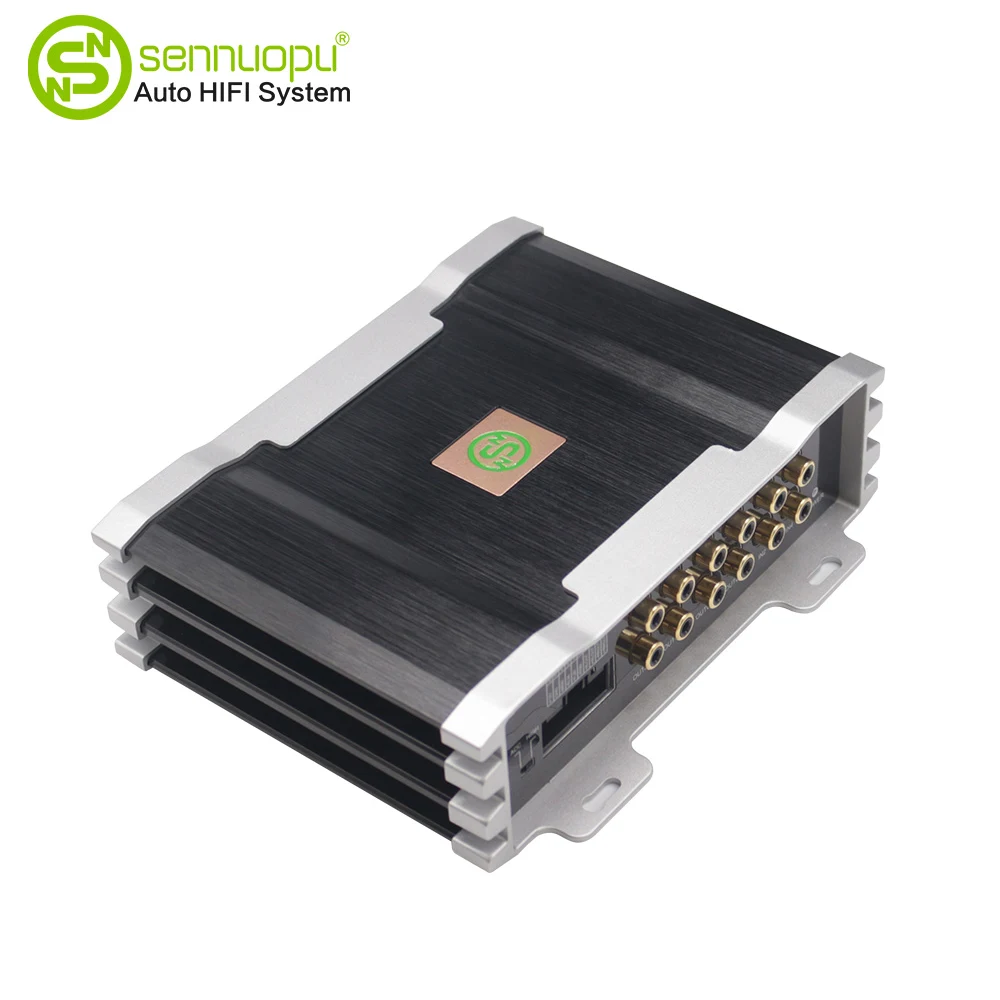
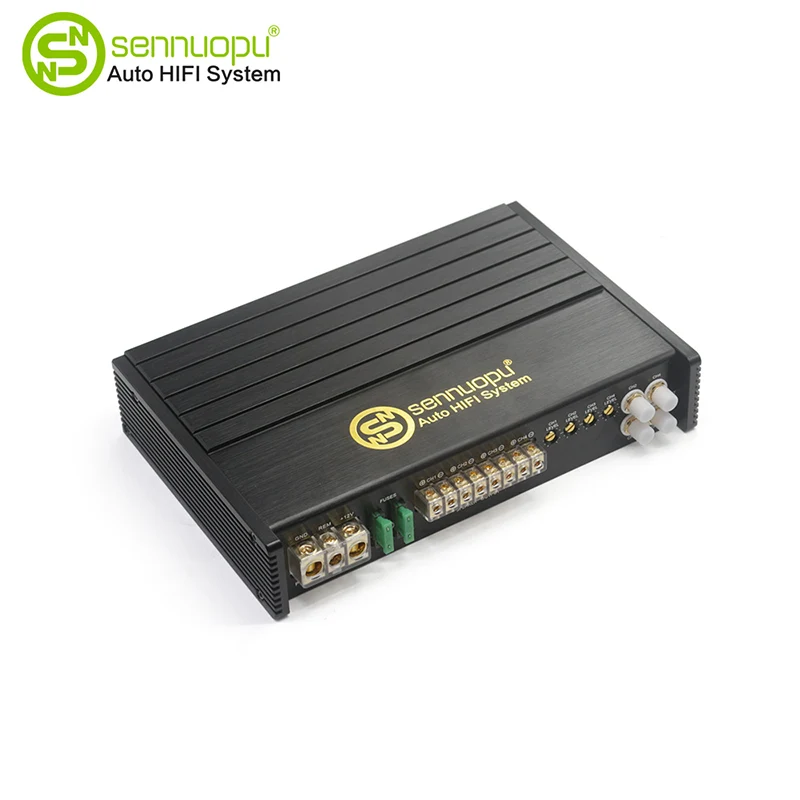
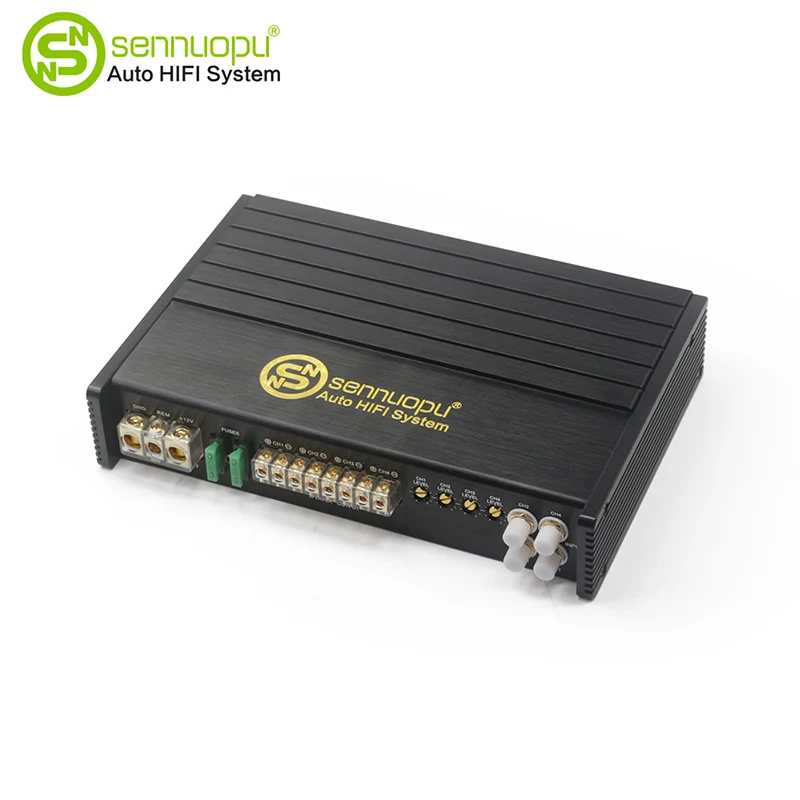
For drivers and car audio enthusiasts who demand greater control, clean amplification, and dependable performance, Sennuopu offers the 4-Channel Car Stereo Amplifier High Power Class AB, model HQ-200.4A. Featuring Toshiba A1943/C5200 transistors, gold-plated terminals, and an aluminum alloy cooling chassis, this dedicated power amplifier is designed for audio systems that prioritize signal amplification and flexible active crossover configurations.

Article Summary: Discover how a high-power Class AB car amplifier works, what makes the Sennuopu HQ-200.4A distinctive, how it can be integrated with a digital signal processor (DSP), and which technical considerations matter before upgrading your vehicle's sound system. This guide also compares key features, explains installation considerations, and answers common purchasing questions.

4-Channel Car Stereo Amplifier High Power Class AB

Table of Contents

1. What Is a High-Power Class AB Car Amplifier?

2. Why Choose a Four-Channel Amplifier?

3. What Makes the Sennuopu HQ-200.4A Different?

4. Key Features and Technical Specifications

5. How Does DSP Integration Improve Audio System Design?

6. Installation and System Matching Considerations

7. Which Car Audio Applications Suit This Amplifier?

8. What Should Buyers Evaluate Before Purchasing?

9. Frequently Asked Questions

10. Conclusion: Build a More Carefully Engineered Audio System


1. What Is a High-Power Class AB Car Amplifier?

A car amplifier increases the strength of an audio signal so that speakers can reproduce music at useful listening levels. Although a vehicle's head unit may include a built-in amplifier, an external unit can provide a more suitable power stage for upgraded speakers and more demanding audio configurations.

Class AB amplification combines characteristics of Class A and Class B circuit operation. Its output devices conduct in a way that helps reduce crossover distortion compared with a conventional Class B design, while avoiding some of the continuous power consumption associated with pure Class A operation. Actual sound quality, efficiency, and heat generation depend on the circuit design, operating conditions, and installation.

A 4-Channel Car Stereo Amplifier High Power Class AB provides four independently driven output channels. This arrangement offers useful flexibility for multi-speaker systems and active crossover designs, particularly when an external DSP manages frequency distribution, equalization, and time alignment.

However, an amplifier does not automatically improve every system. The results depend on compatible speakers, suitable power delivery, correctly configured signal levels, and professional installation.


2. Why Choose a Four-Channel Amplifier?

Four-channel amplification gives installers more options than a basic two-channel arrangement. Instead of relying entirely on the head unit's built-in output, an external amplifier can supply dedicated amplification to four separate audio paths.

Depending on the system architecture, these channels can support:

  • Front and rear speakers: Provide separate amplification for four speaker locations.
  • Active two-way systems: Drive selected high-frequency and low-frequency speaker sections through an appropriately configured DSP and compatible crossover arrangement.
  • Independent level adjustment: Help installers balance individual channel outputs according to the vehicle's acoustics.
  • System expansion: Form part of a larger installation incorporating additional amplifiers, processors, and dedicated subwoofer equipment.

Channel count alone does not determine suitability. Buyers should also consider speaker impedance, continuous power requirements, input compatibility, crossover functionality, and whether the amplifier supports the intended wiring configuration.


3. What Makes the Sennuopu HQ-200.4A Different?

The Sennuopu HQ-200.4A is presented as a pure four-channel Class AB power amplifier rather than an all-in-one unit with integrated sound-processing functions. This distinction matters for installers who prefer to manage audio tuning through a dedicated DSP or external preamplifier.

Dedicated signal amplification

The amplifier focuses on increasing the strength of the incoming audio signal rather than providing its own DSP-based equalization or crossover tuning. Installers can therefore design the signal-processing stage separately, allowing the selected processor to determine how the audio signal is distributed and adjusted before amplification.

Toshiba A1943/C5200 transistor configuration

The product information identifies Toshiba A1943 and C5200 complementary transistor types in its output stage. These components form part of the amplifier's power-delivery design. The listed output range is 100–150 W per channel at 4 ohms; buyers should confirm the precise continuous and dynamic power ratings under their required operating conditions before comparing products.

Aluminum alloy cooling chassis

The thickened aluminum alloy housing features a ridged, contoured surface intended to improve heat dissipation. Effective thermal management is important because Class AB amplifiers generate heat during operation, particularly when driving demanding speaker loads at high output levels.

Gold-plated terminals and fuse protection

Gold-plated connection terminals support reliable electrical contact when properly installed and maintained. The product also specifies short-circuit fuse protection. These features support practical system integration, although correct cable sizing, grounding, fuse selection, and installation remain essential to electrical safety.

Explore the Sennuopu HQ-200.4A amplifier product page for the manufacturer's product description and inquiry options.


4. Key Features and Technical Specifications

When comparing car amplifiers, buyers should separate confirmed product information from specifications that still require verification. The following table summarizes the published information for the Sennuopu HQ-200.4A.

Specification Published Information Why It Matters
Model HQ-200.4A Identifies the product for technical inquiries and system planning.
Amplifier topology Class AB Defines the amplifier's operating architecture.
Channel count 4 channels Supports multiple independently amplified audio paths.
Output transistor types Toshiba A1943/C5200 Identifies the specified complementary output transistor types.
Listed power per channel 100–150 W at 4 Ω Provides a starting point for checking speaker and system requirements.
Chassis material Thickened aluminum alloy Provides a structural housing and supports heat dissipation.
Connection terminals Gold-plated terminals Supports electrical contact and connection reliability.
Protection feature Short-circuit fuse Provides a specified layer of electrical protection.
Signal processing Dedicated power amplification; no integrated preamp tuning Requires appropriate upstream signal processing when tuning is needed.
Bridging capability Not supported Must be considered when planning speaker and subwoofer connections.

Important purchasing note: The published 100–150 W per-channel range should not automatically be interpreted as a continuous RMS rating at every operating condition. Request confirmation of RMS output, distortion limits, frequency range, minimum supported impedance, supply-voltage conditions, dimensions, and other installation-critical specifications before finalizing a system design.


5. How Does DSP Integration Improve Audio System Design?

A digital signal processor gives installers tools to adjust the audio signal before it reaches the amplifier. In a vehicle, this is particularly useful because speaker positions, reflective surfaces, cabin dimensions, and listening locations can create an uneven frequency response and an imbalanced stereo image.

When paired with a compatible DSP, the Sennuopu HQ-200.4A can form the amplification stage of a more carefully tuned audio system.

Key benefits of DSP-based configuration

  • Active crossover management: Routes appropriate frequency ranges to compatible drivers.
  • Equalization: Helps correct frequency-response irregularities identified during measurement.
  • Time alignment: Adjusts signal timing to improve the perceived placement of instruments and vocals.
  • Channel-level balancing: Helps establish consistent sound levels across the listening area.
  • System flexibility: Allows processing decisions to be made separately from power amplification.

For example, an installer building an active front-stage system may use the DSP to divide the audio signal into suitable frequency bands, then route each processed output to an appropriate amplifier channel. The exact arrangement depends on the number of drivers, processor outputs, and amplifier channels available.

The important distinction is that the HQ-200.4A does not itself provide the DSP functions described above. The external processor must support the intended configuration, and the installer must configure it correctly.


6. Installation and System Matching Considerations

Even a well-designed amplifier can deliver disappointing results if the surrounding components are incompatible. Before installing a four-channel Class AB amplifier, evaluate the complete electrical and acoustic system rather than selecting equipment by power figures alone.

Check speaker impedance and power handling

Confirm that each speaker's nominal impedance is supported by the amplifier and that the selected power level is appropriate for the driver's continuous power-handling capability. Do not assume that a four-ohm power specification guarantees compatibility with every lower-impedance load.

Plan electrical supply and cooling

Class AB amplification produces heat, so the unit needs a secure mounting position with adequate airflow. Power cables, ground connections, and fuse arrangements must be selected according to the manufacturer's installation guidance and the vehicle's electrical requirements.

Verify input signal compatibility

Because the HQ-200.4A is described as a dedicated post-amplifier, check whether the upstream DSP, head unit, or preamplifier supplies the correct signal format and level. Confirm channel routing and gain settings before normal listening.

Follow a practical installation checklist

  1. Confirm the amplifier's dimensions and available mounting space.
  2. Verify the speaker impedance and intended power requirements.
  3. Check the signal source, DSP outputs, and channel assignments.
  4. Install appropriately rated power, ground, and speaker wiring.
  5. Maintain ventilation around the aluminum alloy chassis.
  6. Check polarity, connections, and fuse specifications before powering up.
  7. Set conservative gain levels and test each channel for clean output.
  8. Measure and fine-tune the completed system where suitable equipment is available.

Professional installation is recommended for complex active crossover systems or any configuration requiring modifications to the vehicle's electrical system.


7. Which Car Audio Applications Suit This Amplifier?

The HQ-200.4A is best evaluated for installations where four-channel power amplification and external signal processing are central to the design.

Application Potential Suitability Key Consideration
Upgraded front and rear speakers Potentially suitable Verify channel output, speaker impedance, and power handling.
Active two-way front stage Potentially suitable Use a compatible DSP or external crossover and correct channel routing.
Active three-way audio project May form part of the system Four channels alone may not be sufficient for all drivers; additional amplification may be necessary.
DSP-managed custom installation Suitable for consideration Confirm signal levels and the processor's available outputs.
Bridged subwoofer configuration Not suitable The manufacturer states that this model does not support bridging.

For larger installations, additional amplifiers or dedicated subwoofer equipment may be required. Buyers can also review Sennuopu's car amplifier range to compare alternative system architectures.


8. What Should Buyers Evaluate Before Purchasing?

A successful car audio upgrade starts with clear performance requirements. Rather than focusing exclusively on the phrase “high power,” compare the complete specification and the intended application.

  • Continuous power output: Request RMS figures at the intended impedance, supply voltage, and distortion limit.
  • Channel configuration: Determine how many speakers or active frequency bands need independent amplification.
  • Processing requirements: Establish whether a separate DSP, crossover, or preamplifier is necessary.
  • Electrical compatibility: Confirm the vehicle's charging system, cable requirements, grounding, and fuse arrangements.
  • Thermal performance: Check mounting clearances and cooling requirements for the planned installation.
  • Protection and reliability: Ask about the protection architecture, operating limits, warranty terms, and after-sales support.
  • Supplier communication: Obtain a complete datasheet and clarify any unlisted parameters before ordering.

For distributors, installers, and custom audio businesses, these checks are also useful when comparing suppliers and evaluating whether a product fits a particular customer segment.


9. Frequently Asked Questions

What is the model number of Sennuopu's four-channel Class AB amplifier?

The model listed for the 4-Channel Car Stereo Amplifier High Power Class AB is HQ-200.4A.

How much power does the HQ-200.4A provide?

Sennuopu publishes a power range of 100–150 W per channel at 4 ohms. Buyers should confirm the continuous RMS rating, test conditions, and distortion limits with the manufacturer before using this figure for detailed system calculations.

Does this amplifier include a built-in DSP?

No. The HQ-200.4A is described as a dedicated power amplifier without integrated preamplifier processing or DSP tuning functions. A compatible external DSP or preamplifier can provide the required signal processing.

Can the HQ-200.4A drive a bridged subwoofer setup?

No. According to the product information, this amplifier does not support bridging. Select a suitable amplifier designed for the intended subwoofer configuration instead.

What are the benefits of its aluminum alloy chassis?

The ridged aluminum housing is designed to help dissipate heat generated during operation. Adequate ventilation and correct installation are still necessary for reliable performance.

Is this amplifier suitable for an active crossover system?

It can be considered for active two-way or three-way system designs when paired with compatible external processing. The available four channels may require additional amplifiers for systems with more independently amplified drivers.

What should I confirm before requesting a quotation?

Provide your intended application, speaker impedance, required continuous power, DSP or head-unit configuration, expected quantity, and destination market. Ask the supplier to confirm the full datasheet, pricing, lead time, warranty, and available customization options.


10. Conclusion: Build a More Carefully Engineered Audio System

A well-matched four-channel amplifier can provide a practical foundation for an upgraded in-car sound system, especially when channel control and external signal processing are important. With its Class AB architecture, specified Toshiba A1943/C5200 output transistors, aluminum alloy cooling chassis, gold-plated terminals, and dedicated amplification design, the Sennuopu HQ-200.4A is an option worth evaluating for compatible custom audio installations.

The best results come from matching amplifier output to speaker requirements, verifying technical specifications, planning the power supply correctly, and configuring the complete signal chain. If you are sourcing a 4-Channel Car Stereo Amplifier High Power Class AB for a new installation, distribution project, or customized car audio solution, visit the official Sennuopu product page to review the product and contact us for technical details, quotation requests, and assistance in evaluating whether the HQ-200.4A fits your audio system requirements.

Related News
Leave me a message
X
We use cookies to offer you a better browsing experience, analyze site traffic and personalize content. By using this site, you agree to our use of cookies. Privacy Policy
RejectAccept