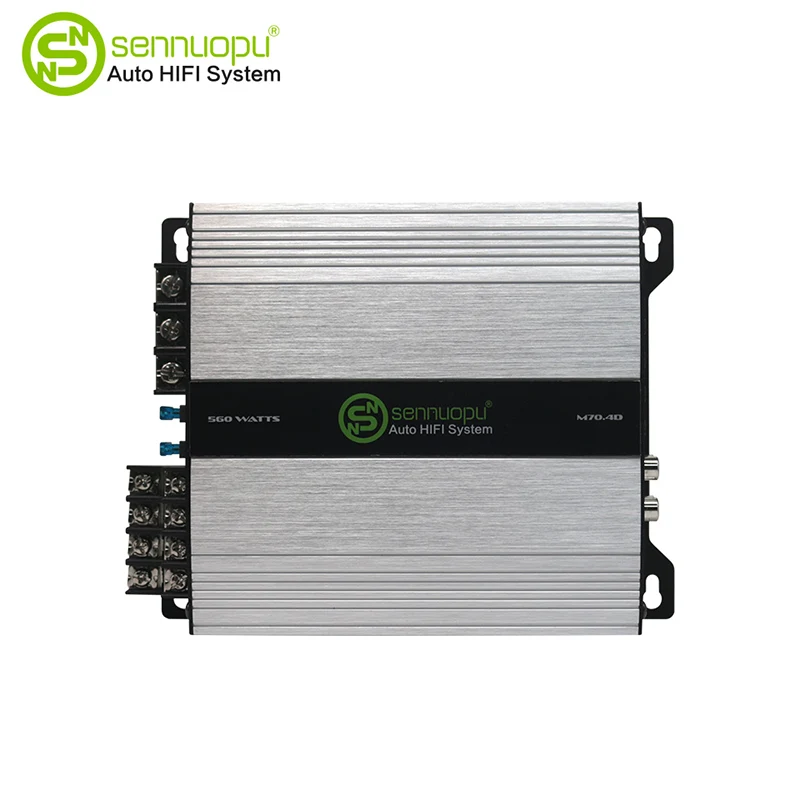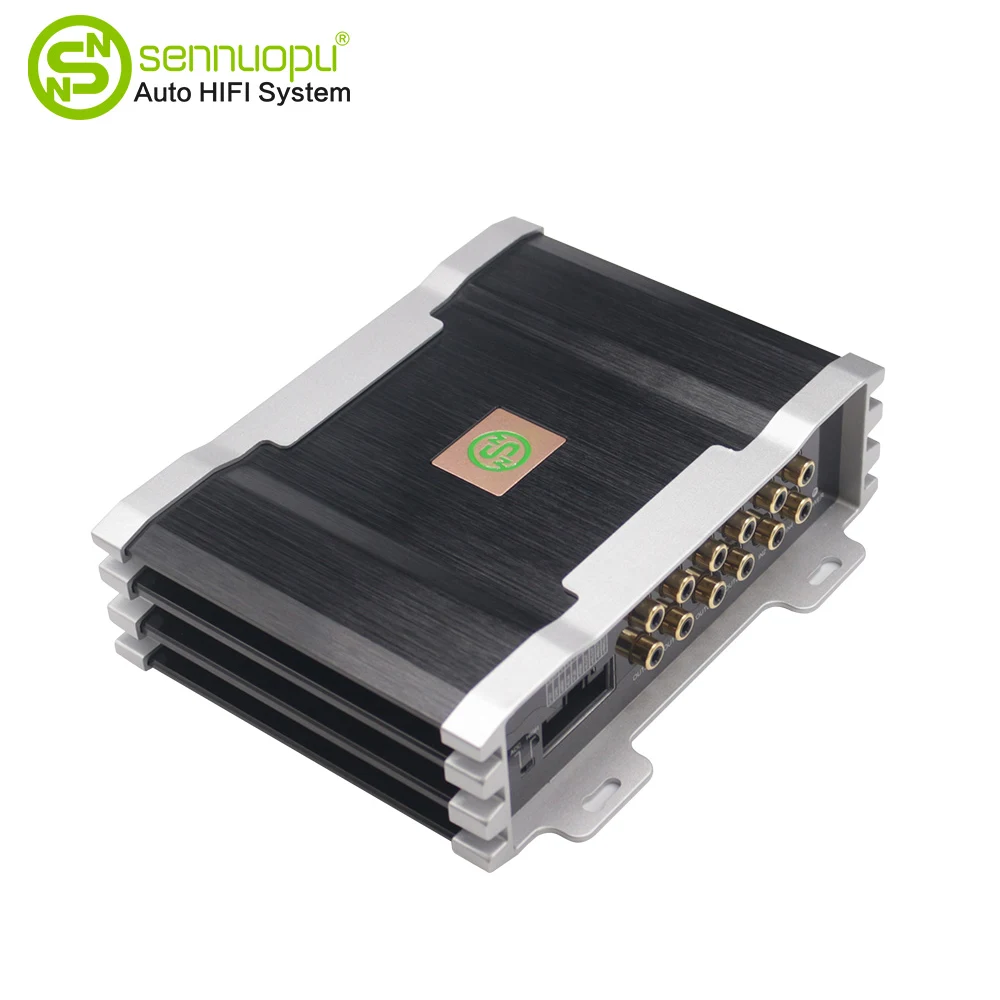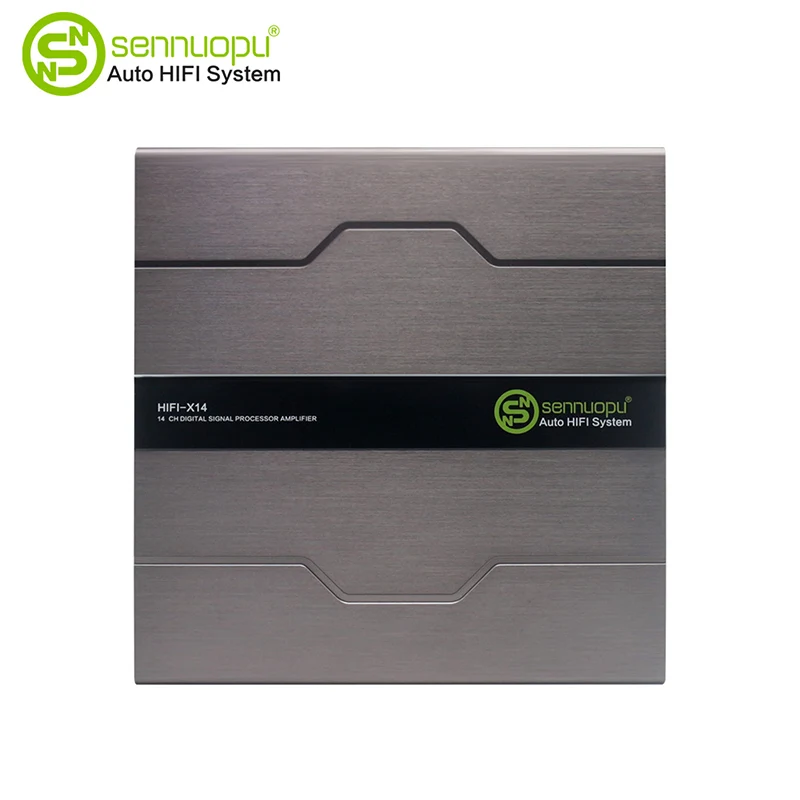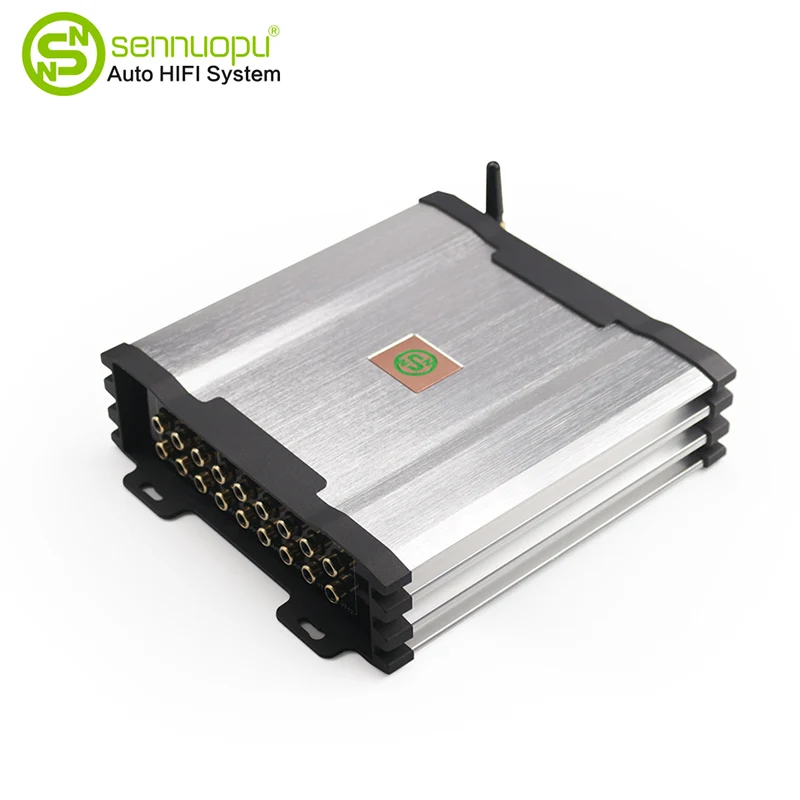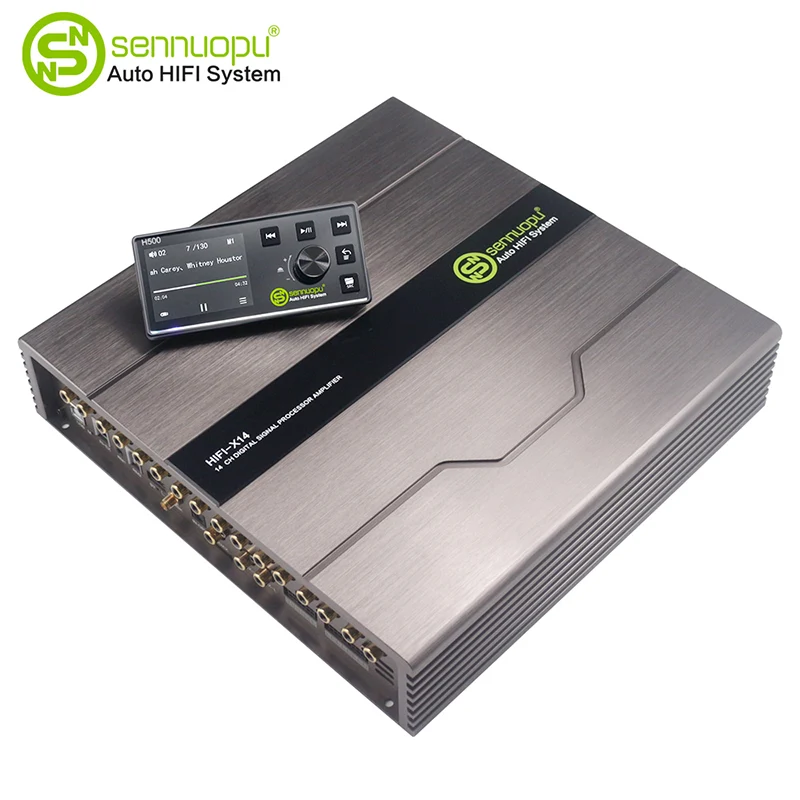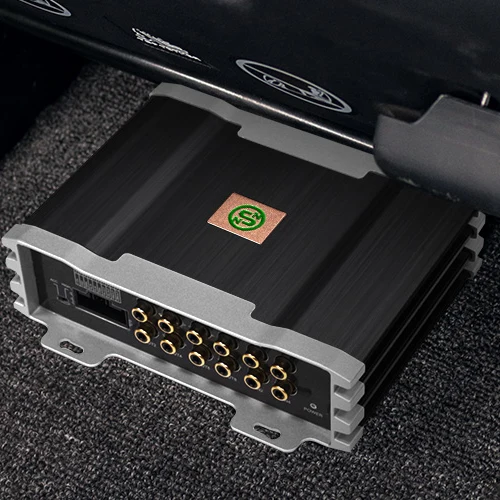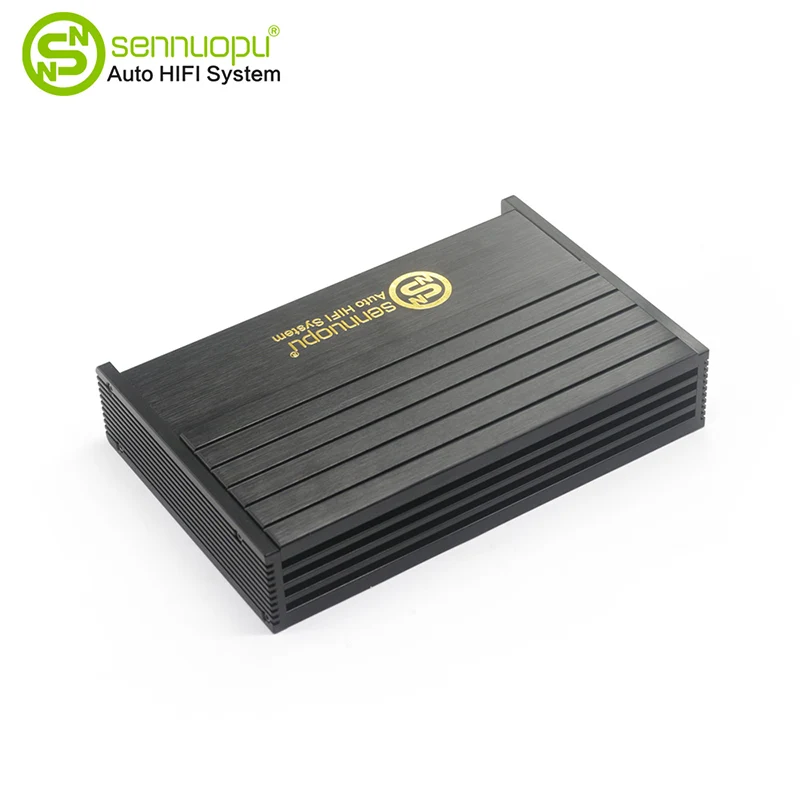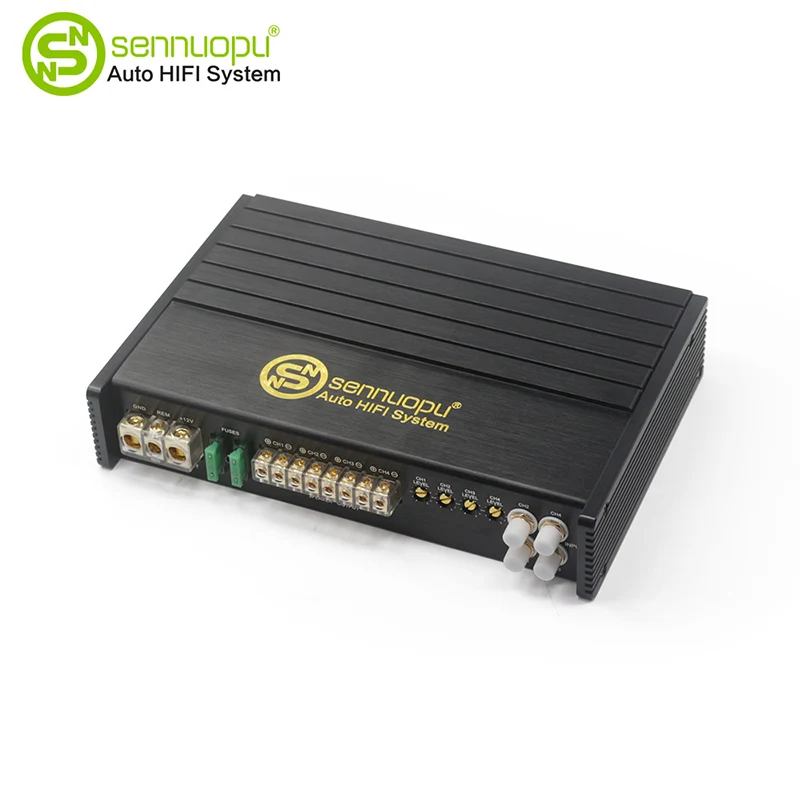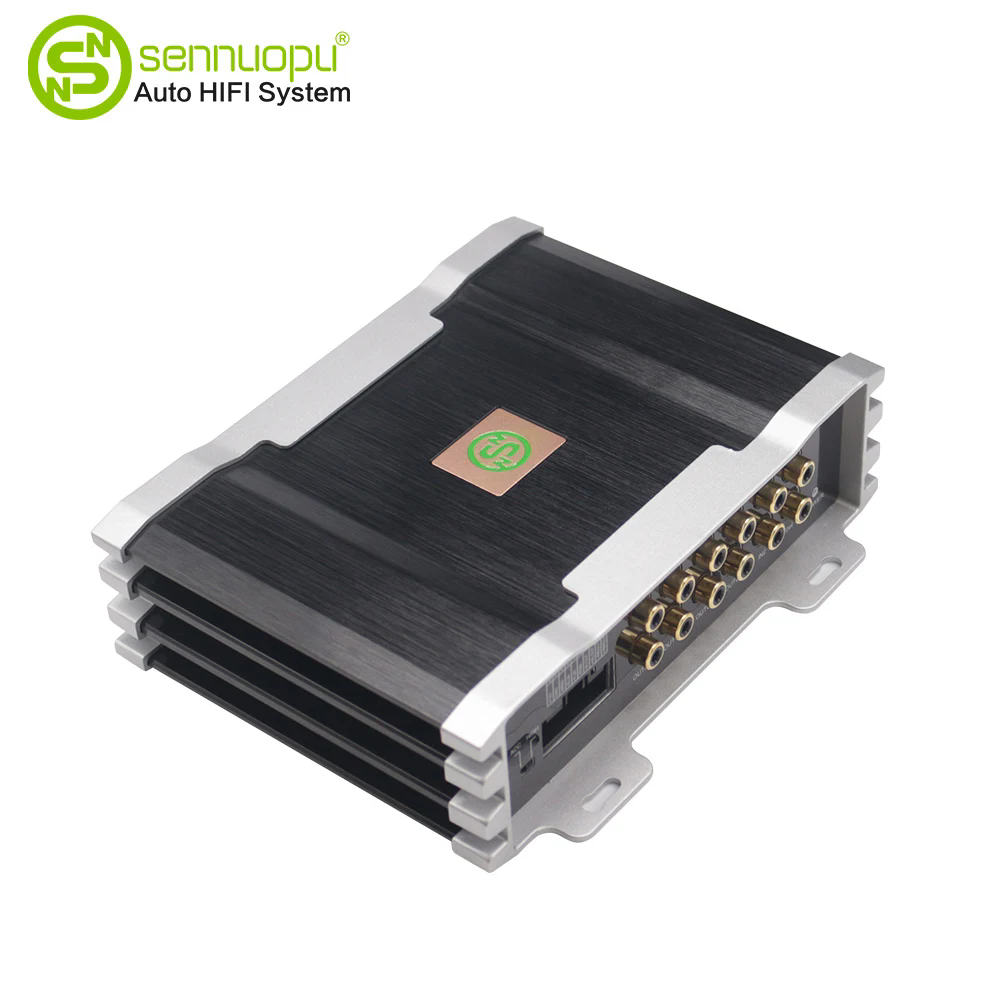



Car Sound Amplifier 4 Ch DSP audio 8-channel Digital Sound Processors combines amplification, digital signal processing, and flexible audio control in one compact platform. Sennuopu applies this architecture to the DP-X10B Plus, helping car audio installers and enthusiasts achieve more precise sound staging, equalization, filtering, and system integration without requiring multiple separate devices.
A modern vehicle audio system needs more than raw amplifier power. Speaker positioning, cabin acoustics, frequency overlap, phase, and time alignment can all affect the final listening experience. The Sennuopu DP-X10B Plus addresses these factors by integrating four-channel amplification with an 8-channel digital signal processor, 31-band equalization, adjustable filters, phase control, delay adjustment, and multiple audio input options. Its built-in amplifier delivers 50W RMS × 4 at 4Ω, while its DSP architecture allows additional external amplification when a more complex system is required. With Bluetooth, USB, U-disk, and optical inputs, plus Windows and Android tuning options, this type of integrated DSP amplifier provides a practical foundation for customized car audio installations.
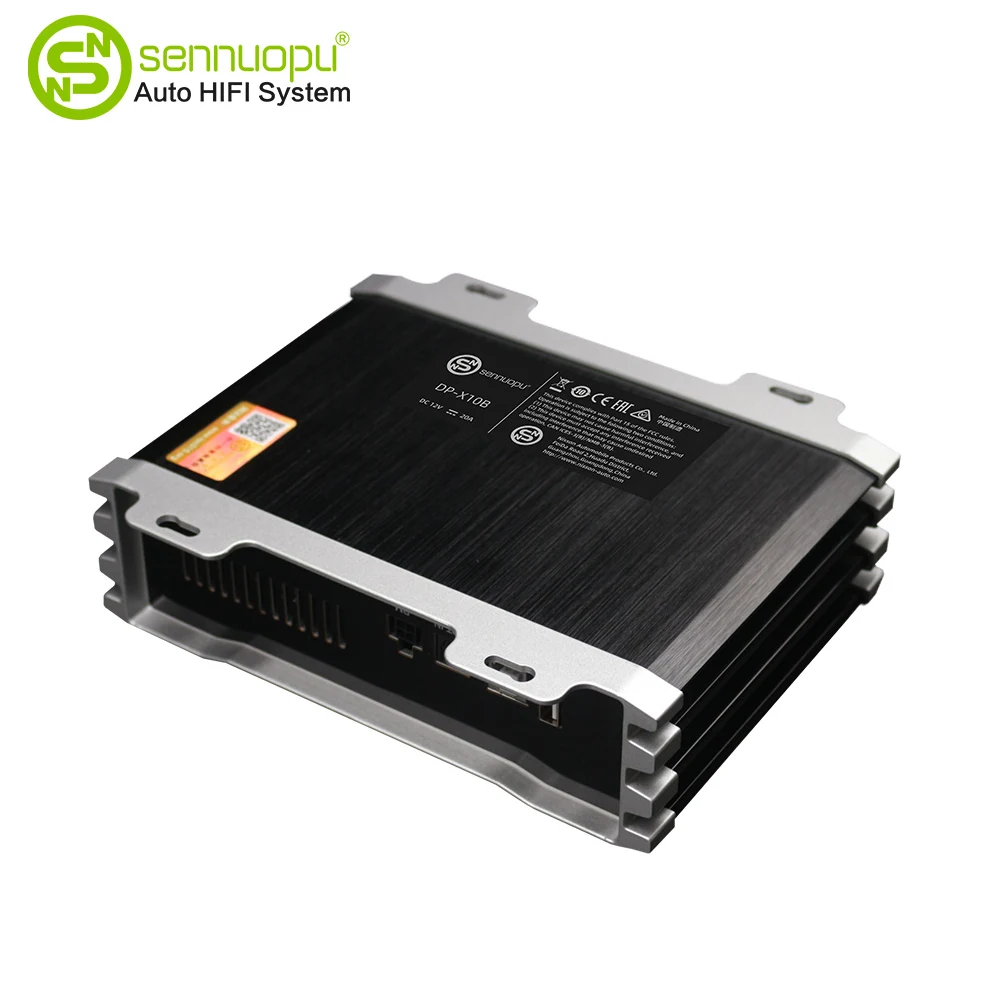
Table of Contents
- Why Does DSP Matter in a Modern Car Audio System?
- What Are the Key Features of the 4-Channel DSP Amplifier?
- What Specifications Should Buyers Evaluate?
- How Does Multi-Channel DSP Improve Sound Control?
- Where Can This DSP Amplifier Be Used?
- What Should Be Considered During Installation?
- How Should You Choose a Digital Sound Processor?
- Frequently Asked Questions
- Conclusion
Why Does DSP Matter in a Modern Car Audio System?
Installing more powerful speakers or a larger amplifier does not automatically create better sound. A vehicle interior is a challenging acoustic environment. Reflections from glass, seats, doors, dashboards, and other surfaces can cause different frequencies to reach the listener at different times and levels.
A digital signal processor helps installers address these problems before the amplified signal reaches the speakers. Instead of treating every speaker as part of a single undifferentiated system, DSP allows individual channels to be configured according to their intended frequency range and position.
For example, high-frequency speakers can be separated from midrange or low-frequency drivers using adjustable crossover filters. Time delay can then help compensate for differences in speaker-to-listener distance, while phase adjustment can help optimize the interaction between individual drivers.
This is why an integrated DSP amplifier can be particularly useful for enthusiasts seeking a more controlled and tunable car audio system.
What Are the Key Features of the 4-Channel DSP Amplifier?
The Sennuopu DP-X10B Plus combines several functions that would traditionally require separate components. According to the product specifications, it integrates a high-fidelity media player, four-channel amplifier, and 8-channel digital signal processor in a space-saving design.
- 4-channel amplification: Provides 50W RMS × 4 at 4Ω through the built-in amplifier.
- 8-channel DSP: Provides additional processing flexibility for multi-speaker configurations.
- 31-band EQ: Enables detailed frequency adjustment for system tuning.
- Adjustable filters: Supports high-pass, low-pass, and band-pass filtering.
- Phase control: Offers selectable 0° or 180° phase adjustment.
- Time alignment: Provides delay adjustment from 0–20 ms.
- Digital and analog connectivity: Includes USB, optical, U-disk, and Bluetooth audio options.
- Software control: DSP parameters can be adjusted through Windows PC software or an Android mobile application.
- External amplifier support: The DSP architecture can be used with additional amplification when the installation requires more output power.
These functions make the platform suitable for installations where flexibility and tuning precision are more important than simply increasing volume.
What Specifications Should Buyers Evaluate?
When comparing a digital amplifier and processor, buyers should look beyond wattage. Channel architecture, frequency control, connectivity, software support, and signal-processing functions can have a major impact on installation possibilities.
| Specification | DP-X10B Plus | Why It Matters |
|---|---|---|
| Amplifier Channels | 4 channels | Supports multiple speaker channels from one integrated unit |
| Amplifier Output | 50W RMS × 4 at 4Ω | Provides built-in amplification for compatible speaker systems |
| DSP Channels | 8 channels | Provides additional signal-processing flexibility |
| Equalization | 31-band EQ | Allows detailed tonal adjustment |
| Frequency Response | 20Hz–20kHz | Covers the commonly used audible frequency range |
| Filter Range | 20Hz–20kHz | Supports precise speaker frequency management |
| Filter Slopes | 12–48 dB/octave | Provides flexibility when configuring crossovers |
| Time Delay | 0–20ms | Supports speaker time-alignment adjustments |
| Phase Adjustment | 0° / 180° | Helps manage phase relationships between channels |
| Audio Formats | WAV, AIF, AIFF, FLAC, ALAC, AAC, MP3 | Supports multiple digital music sources |
How Does Multi-Channel DSP Improve Sound Control?
The biggest advantage of an 8-channel digital processor is the ability to manage different parts of a car audio system independently. Instead of applying one broad EQ setting to every speaker, installers can configure individual processing channels according to the speaker arrangement.
31-Band Equalization
A 31-band equalizer provides detailed control over the frequency spectrum. This can be useful when correcting excessive peaks, reducing unwanted tonal coloration, or shaping a preferred listening profile.
Adjustable Crossover Filters
High-pass, low-pass, and band-pass filters allow installers to define which frequencies should reach individual speakers. The DP-X10B Plus supports filter slopes between 12 and 48 dB/octave and provides Butterworth, Bessel, and Linkwitz-Riley filter options.
Time Alignment
Because speakers are positioned at different distances from the driver and passengers, their sound does not necessarily arrive at the listening position simultaneously. Delay adjustment from 0–20 ms gives installers a practical tool for improving timing relationships between channels.
Phase Adjustment
Phase relationships can influence how multiple speakers interact, particularly around crossover regions. A selectable 0° or 180° phase setting provides another adjustment point during system calibration.
Where Can This DSP Amplifier Be Used?
An integrated 4-channel amplifier and 8-channel processor can support a variety of automotive audio configurations. It can be used for both enthusiast-oriented upgrades and professional installation projects where compact hardware and extensive signal control are required.
- OEM audio upgrades: Improve processing capability without building an unnecessarily large equipment stack.
- Custom car audio: Configure multiple speaker channels with independent DSP parameters.
- High-fidelity listening systems: Use lossless audio support and detailed EQ adjustment for more precise tuning.
- Multi-speaker installations: Use the 8-channel DSP architecture to manage a broader speaker layout.
- Professional tuning: Adjust system parameters through PC software or an Android mobile application.
- Expandable systems: Connect external amplification when the built-in 4-channel output is not sufficient for the desired configuration.
For installers, the combination of amplification and DSP can also simplify system architecture by reducing the number of individual processing components required.
What Should Be Considered During Installation?
Correct installation is just as important as the specifications of the processor itself. Before configuring the DSP, installers should identify the vehicle's speaker layout, amplifier requirements, available signal sources, and intended listening position.
- Map the speaker system: Identify every speaker and its intended frequency range.
- Confirm impedance: Ensure the speaker load is compatible with the amplifier's specified operating conditions.
- Plan signal routing: Determine whether USB, optical, Bluetooth, or another audio source will be used.
- Configure crossovers: Establish appropriate high-pass, low-pass, or band-pass settings before detailed EQ work.
- Set time alignment: Measure speaker distances and use the DSP delay function to establish better timing relationships.
- Adjust phase: Check phase interaction between related channels, particularly around crossover points.
- Perform EQ tuning: Fine-tune the 31-band equalizer after the basic signal structure has been established.
A systematic tuning sequence helps avoid compensating for one problem by accidentally creating another. In professional installations, measurements can also be used alongside listening tests to verify the final configuration.
How Should You Choose a Digital Sound Processor?
Choosing a DSP amplifier should start with the system architecture rather than a single specification. Buyers should consider how many speakers need independent processing, whether external amplifiers will be used, what audio sources are required, and how much tuning flexibility the installation demands.
Key purchasing considerations include:
- Number of amplifier and DSP channels
- Continuous RMS output at the target speaker impedance
- Equalizer resolution and available adjustment range
- Crossover types and selectable slopes
- Time-delay and phase-control capabilities
- Supported lossless and compressed audio formats
- Bluetooth, USB, optical, and other input options
- Availability of PC and mobile tuning software
- Compatibility with external amplifiers
- Physical size and installation space
For installers looking for more information about related equipment, the Sennuopu car DSP amplifier range provides additional options for building customized automotive sound systems.
Frequently Asked Questions
What is the difference between an amplifier and a DSP?
An amplifier increases the power of an audio signal so it can drive speakers, while a DSP modifies and manages the signal before amplification or between processing stages. An integrated DSP amplifier combines both functions in one device.
How many amplifier channels does the DP-X10B Plus have?
The DP-X10B Plus has four built-in amplifier channels, rated at 50W RMS × 4 at 4Ω. It also incorporates an 8-channel digital signal processor for additional signal-management flexibility.
Does the DP-X10B Plus support lossless audio?
Yes. The product supports several high-quality formats, including WAV, AIF, AIFF, FLAC, and ALAC, in addition to AAC and MP3.
Can the DSP be adjusted using a computer?
Yes. The product supports DSP adjustment through Windows PC software using USB. An Android mobile application with Bluetooth connectivity is also available for flexible tuning.
What does an 8-channel DSP processor do?
An 8-channel DSP can independently process multiple audio channels, allowing installers to configure EQ, crossover, delay, and phase parameters for different parts of a car audio system.
Can external amplifiers be connected?
Yes. The DP-X10B Plus supports external amplification, making the platform suitable for systems that require additional power beyond its built-in four amplifier channels.
Conclusion
A well-designed automotive audio system depends on both amplification and precise signal management. The Sennuopu DP-X10B Plus combines four-channel 50W RMS amplification with an 8-channel DSP, 31-band EQ, adjustable crossover filters, phase control, time alignment, Bluetooth, USB, optical input, and flexible software tuning. This integrated architecture gives installers and audio enthusiasts a practical way to build, tune, and expand customized in-car sound systems. If you are planning a new automotive audio project or need technical information about this DSP amplifier, contact us to discuss your requirements, system configuration, and available customization options with Sennuopu.