Whatsapp
Article Summary: A modern car audio upgrade is not only about adding more power. Signal control, channel flexibility, source compatibility, and precise tuning all determine how a system performs. The Car Audio 8 CH Amplifier with 10 CH DSP Processor combines multi-channel amplification with advanced digital signal processing, making it a practical solution for drivers and installers seeking clearer, more detailed, and highly customizable in-car sound.
Why Does a Multi-Channel Car Audio System Matter?
What Makes an 8-Channel Amplifier with 10-Channel DSP Different?
What Are the Key Features to Consider?
How Do Amplification and DSP Work Together?
Where Can This Audio Solution Be Used?
How Should You Choose the Right Car DSP Amplifier?
Factory car audio systems are designed to meet general vehicle requirements, but they may not provide the level of soundstage control, tonal balance, or output flexibility expected by serious audio enthusiasts. A multi-channel amplifier can distribute power to different speakers while a DSP provides detailed control over the audio signal before it reaches each channel.
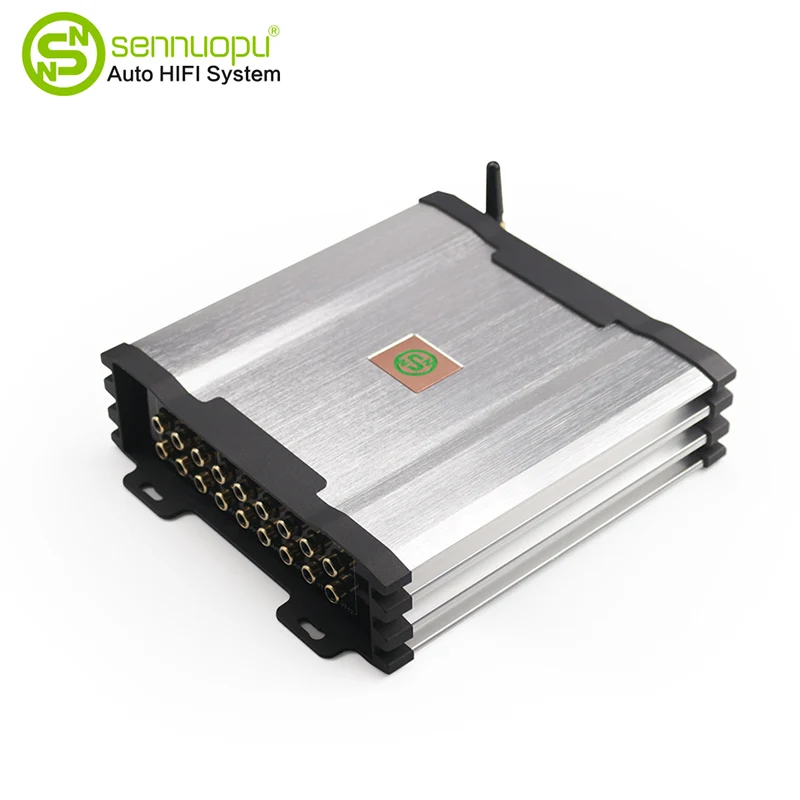
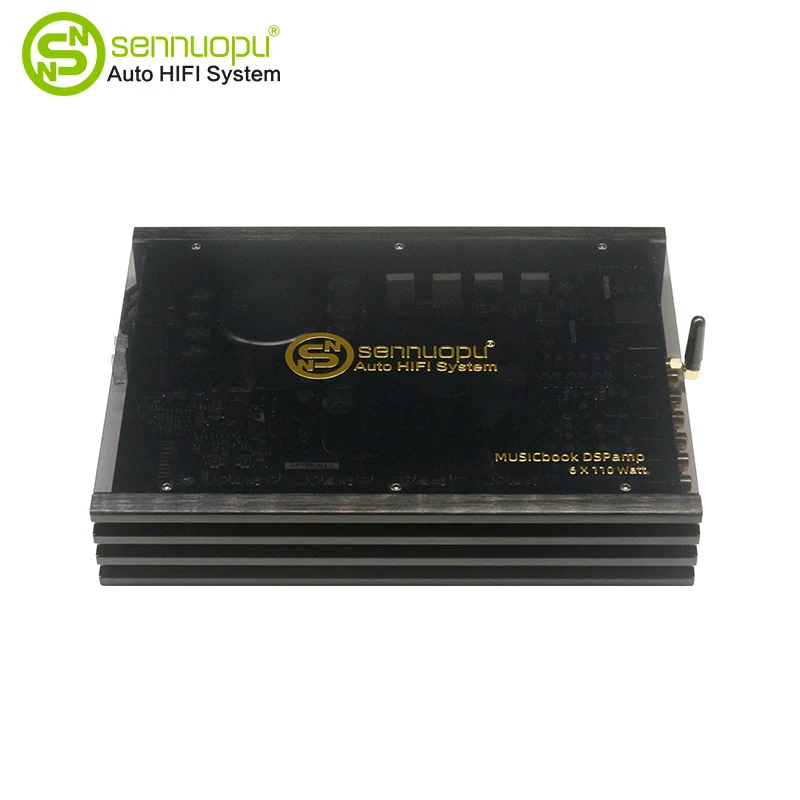
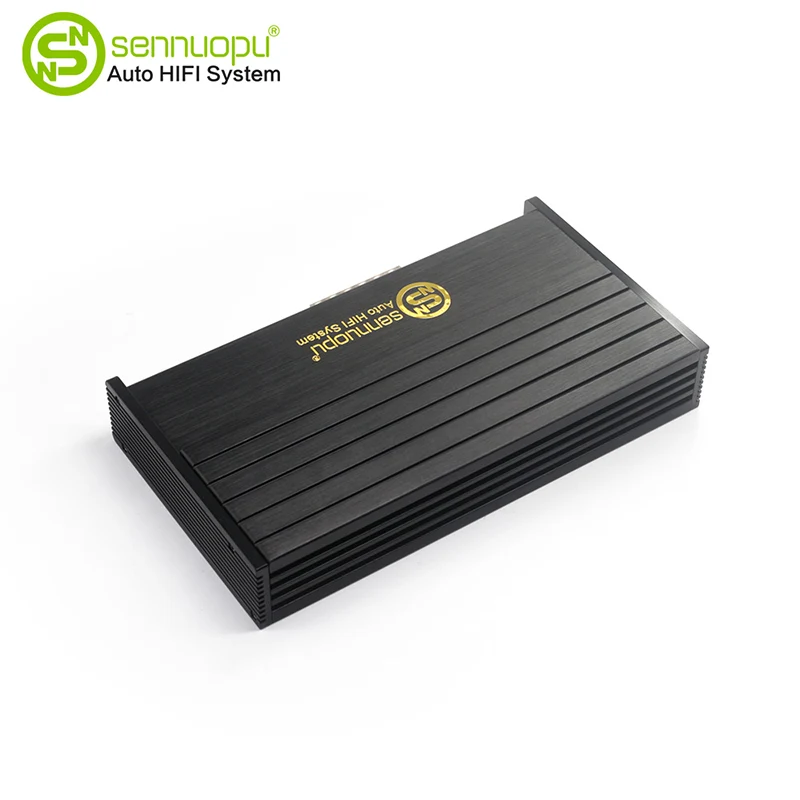
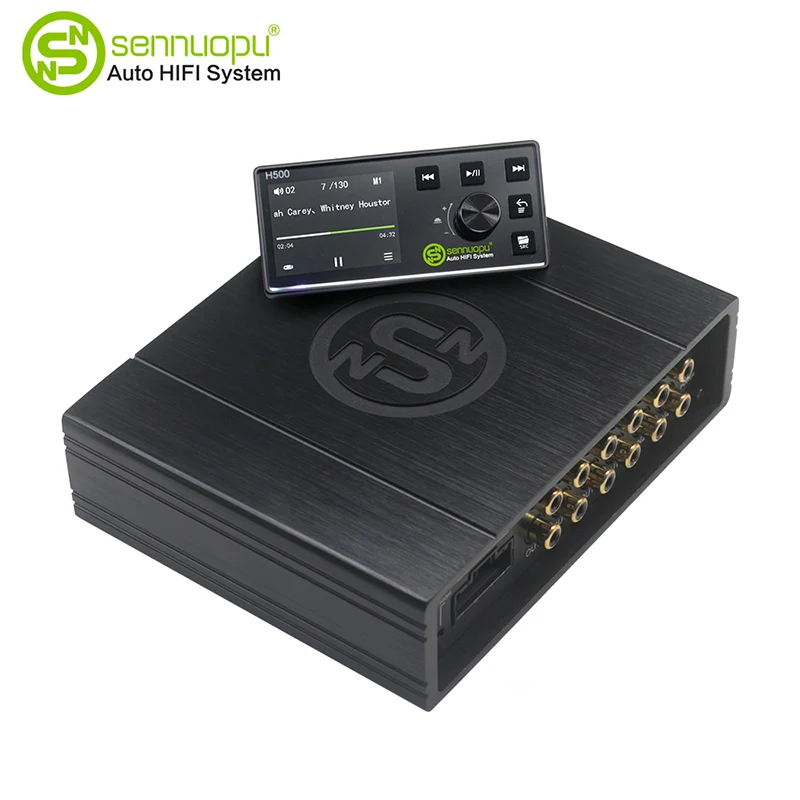
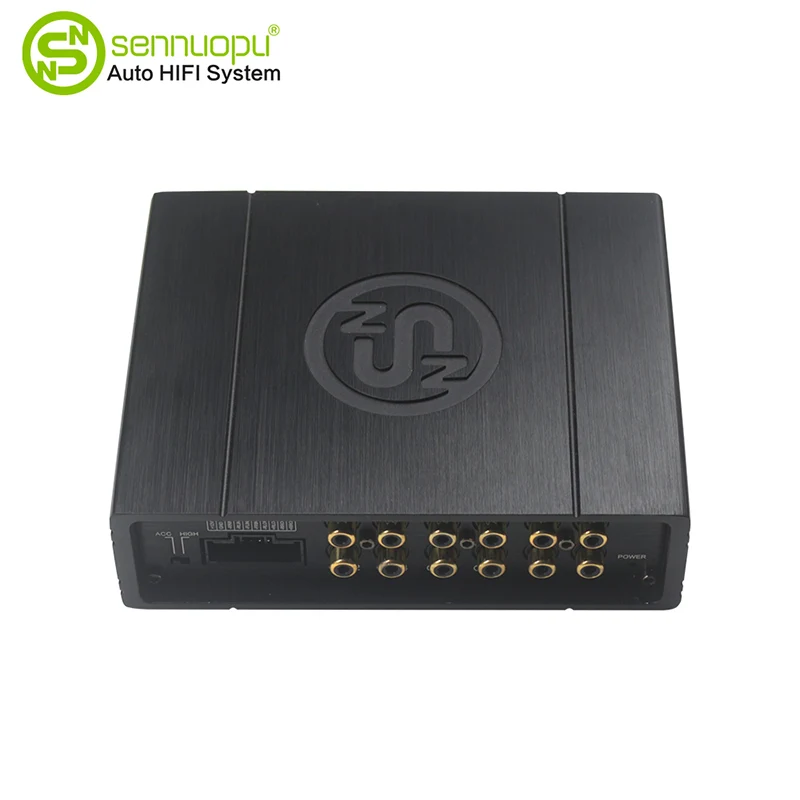
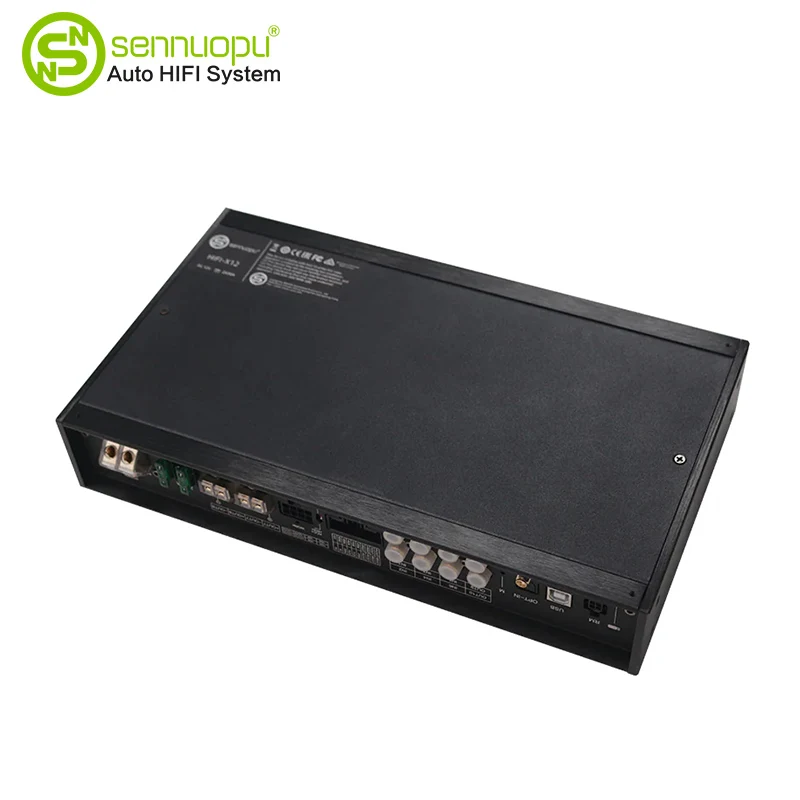
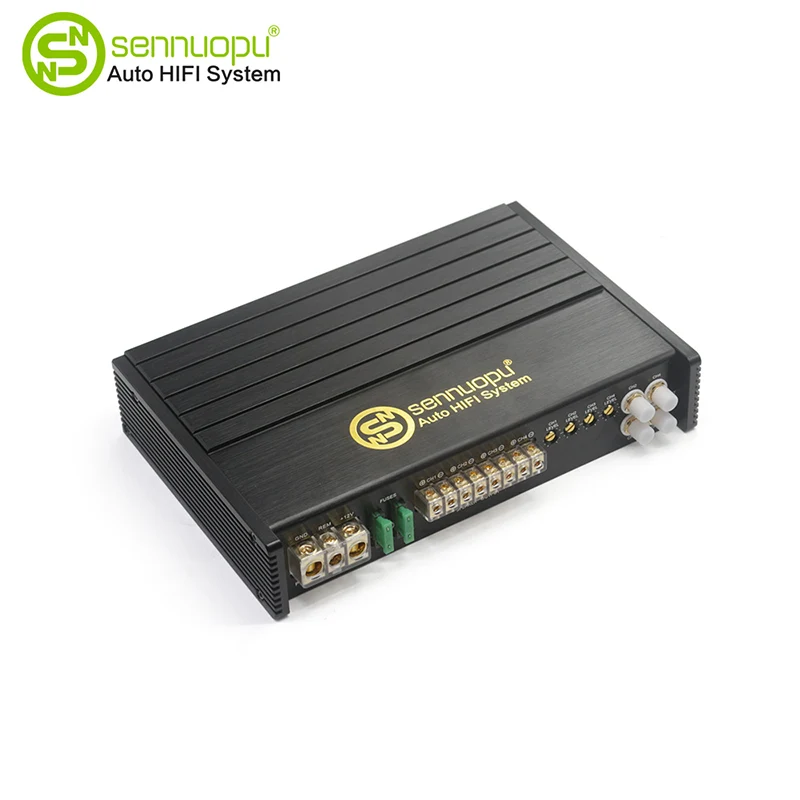
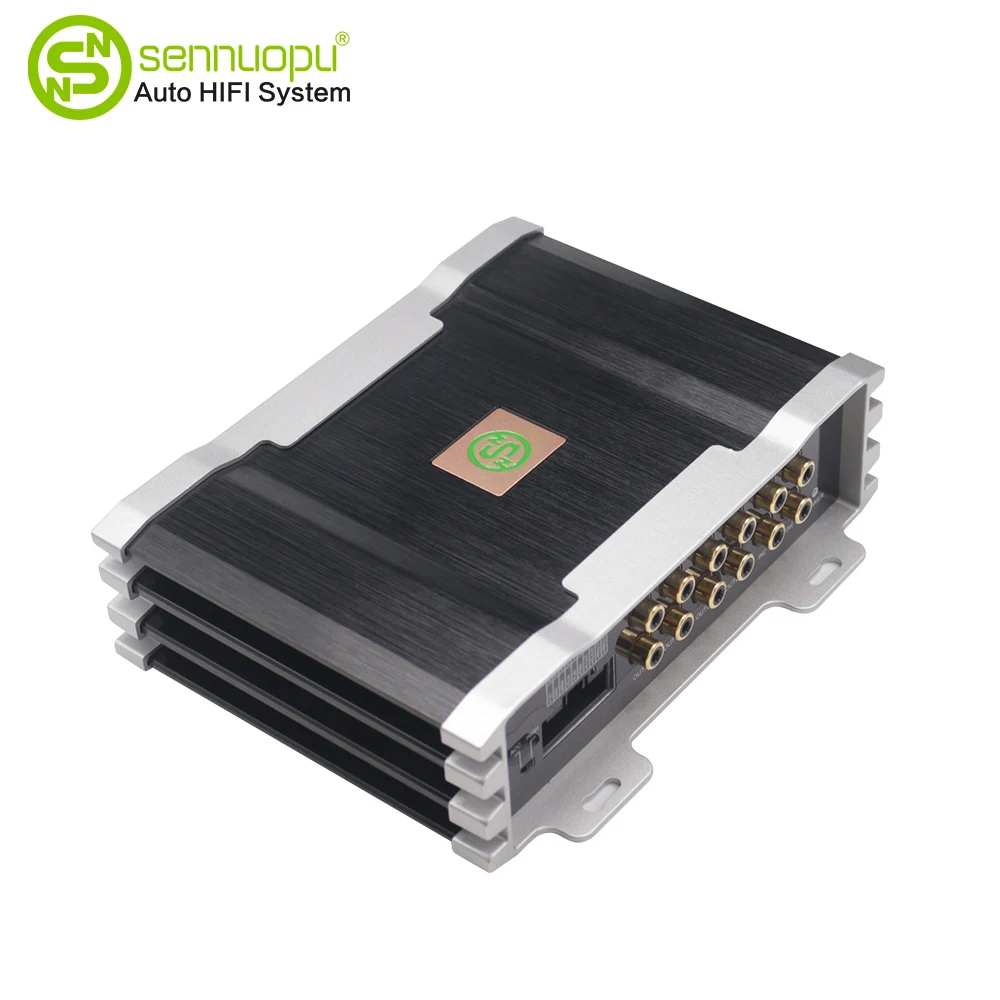
Sennuopu develops automotive audio solutions designed around this combination of amplification and digital processing. Its DS-M10 model integrates eight Class D amplifier channels with a 10-channel DSP platform, providing a compact architecture for upgrading complex vehicle sound systems.
This approach is particularly useful when an installer wants to retain the vehicle's original head unit while improving the performance of the speakers and creating a more controlled acoustic environment.
The main advantage of an integrated amplifier and DSP is that amplification and signal management are handled within one coordinated platform. Instead of relying on multiple separate components, installers can manage multiple speaker channels while adjusting equalization, phase, frequency, slope, and delay.
The DS-M10 is specified with 8 × 50 W Class D amplification at 2 ohms and a 10-channel equalization system. Its architecture also supports RCA output expansion when additional external amplification is required.
| Feature | Specification | Practical Benefit |
|---|---|---|
| Amplifier Channels | 8 channels | Supports multi-speaker system configurations |
| Amplifier Type | Class D | Efficient power delivery in a compact design |
| Rated Output | 50 W × 8 @ 2 ohms | Provides dedicated power for multiple speaker channels |
| DSP Channels | 10 channels | Enables detailed individual channel processing |
| Equalization | 31-band EQ tuning | Allows detailed tonal adjustment |
| High-Level Input | 8 channels | Suitable for integration with factory audio systems |
| Optical Input | Digital optical | Supports high-quality digital signal transmission |
| RCA Input | 2-channel RCA | Provides flexible analog source connectivity |
| Bluetooth | Built-in | Convenient wireless audio playback |
| Lossless Playback | FLAC, ALAC, WAV and more | Supports high-fidelity music sources |
Eight amplifier channels provide installers with considerable flexibility when designing a multi-speaker system. The Class D architecture helps deliver efficient amplification without requiring the same physical space typically associated with larger conventional amplifier designs.
With eight channels available, the system can separately drive different speakers in a vehicle, helping create a more balanced front stage, rear fill, and other customized configurations.
The DSP section is where the system becomes more than a conventional amplifier. Each channel can be adjusted independently, allowing installers to compensate for differences in speaker location, cabin acoustics, and frequency response.
These controls can help position vocals more naturally, improve stereo imaging, tighten transitions between speakers, and create a more coherent listening experience.
One vehicle may use a factory head unit, another may depend on an aftermarket source, and some users may prefer wireless playback. A flexible audio processor therefore needs to accommodate different signal sources.
The DS-M10 provides high-level inputs for factory systems, optical input for digital sources, RCA inputs for analog connections, Bluetooth connectivity, and an integrated lossless audio player supporting formats such as FLAC, ALAC, and WAV.
Not every vehicle has the same acoustic requirements. Some installations may be satisfied with the integrated eight-channel amplifier, while larger systems may require additional power.
RCA outputs allow the system to be expanded with an external amplifier. This makes the platform suitable for projects that may evolve from a standard multi-speaker upgrade into a more sophisticated high-output configuration.
An amplifier primarily increases the power of an audio signal so that speakers can reproduce sound at the required level. A DSP, in contrast, focuses on how that signal is shaped and controlled.
When these technologies are integrated, the signal path can be managed more precisely. For example, an installer can apply equalization to correct tonal imbalances, adjust crossover points to direct suitable frequencies to the appropriate speakers, and introduce time delay to improve soundstage alignment.
This is especially important inside a vehicle because listeners are not positioned at equal distances from every speaker. The driver's seat may be much closer to the left speaker than the right speaker. DSP time alignment can compensate for these differences and help create a more centralized sound image.
A well-designed tuning process generally involves:
The objective is not simply to increase volume. The goal is to achieve a controlled combination of clarity, tonal balance, imaging, dynamics, and listening comfort.
An integrated multi-channel amplifier and DSP processor can support a wide range of automotive audio upgrade projects.
For installers, another advantage is the ability to consolidate several functions into a single platform. This can simplify system planning and reduce the amount of separate equipment required inside the vehicle.
Choosing an amplifier with DSP should start with the vehicle and speaker system rather than the amplifier's channel count alone. A suitable solution should match the electrical, acoustic, and installation requirements of the project.
Count the speakers that require independent amplification and determine whether the system includes tweeters, midrange drivers, woofers, subwoofers, or center channels. This helps establish the required number of amplifier and DSP channels.
If the vehicle uses a factory infotainment system, high-level input capability can be especially important. Optical, RCA, and Bluetooth inputs provide additional flexibility for different installation scenarios.
A system with RCA expansion can be advantageous when the customer expects to add more powerful external amplification later. This prevents the initial installation from becoming a dead-end configuration.
Look beyond the number of DSP channels. Important questions include whether individual channels can be tuned, what equalization options are available, and whether phase, crossover, slope, and delay parameters can be adjusted.
| Buying Consideration | Why It Matters |
|---|---|
| Channel Count | Determines how many speakers can receive dedicated processing or amplification |
| Power Output | Must match the requirements of the connected speakers |
| DSP Controls | Determines the level of sound customization available |
| Input Compatibility | Ensures integration with factory and aftermarket sources |
| Expansion Capability | Allows the system to grow with future audio upgrades |
| Audio Format Support | Important for users who listen to high-resolution or lossless music |
It is an integrated automotive audio device that combines eight amplifier channels with ten DSP processing channels. The amplifier provides power to speakers, while the DSP provides detailed control over equalization, frequency, phase, slope, and time delay.
Yes. The DS-M10 includes eight-channel high-level inputs designed to receive signals from original vehicle audio systems. This makes it suitable for OEM audio upgrades where replacing the factory head unit is undesirable.
Yes. Built-in Bluetooth input provides a convenient wireless source option. The system also includes a digital lossless player supporting formats including FLAC, ALAC, and WAV.
Yes. RCA output expansion allows an external amplifier to be added when a project requires more power or additional speaker channels.
A vehicle cabin creates uneven speaker distances, reflections, and acoustic interactions. DSP tuning allows an installer to compensate for these factors through equalization, phase adjustment, crossover control, and time alignment.
A high-performance automotive sound system requires more than amplifier power. The combination of multi-channel amplification, flexible source connectivity, and detailed DSP tuning can provide a stronger foundation for a precisely configured in-car listening experience. With eight Class D amplifier channels, ten DSP channels, multiple input options, lossless playback, and RCA expansion, the DS-M10 is designed for installers and audio enthusiasts seeking a flexible OEM-compatible upgrade platform.
For product specifications, application guidance, system matching, or customized automotive audio solutions, learn more about the Car Audio 8 CH Amplifier with 10 CH DSP Processor and contact us to discuss your project requirements with the Sennuopu team.