Whatsapp
If your music feels “thin,” your kick drum disappears at highway speed, or turning up the volume just makes everything harsher, you’re not imagining it—most factory systems can’t move enough air to reproduce low frequencies cleanly. A Car Subwoofer fixes that by handling bass the right way: deeper extension, more impact, and less strain on your door speakers. This guide breaks down the real-world problems buyers face—space limits, confusing sizes, matching amps, wiring anxiety, buzzing panels—and gives you a practical path to choosing and installing a setup that sounds strong without turning your trunk into a storage crisis.
People don’t buy bass gear because they love buying gear—they buy it because something feels wrong every time they press play. Here are the most common complaints, and what a Car Subwoofer changes:
The big surprise for many first-timers: adding a subwoofer often makes the whole system sound cleaner—even at the same volume—because your main speakers stop fighting a job they were never designed to do.
A subwoofer is simply a speaker built to move more air at low frequencies. In a car cabin, bass behaves differently than in a living room: you’ve got reflective glass, uneven seating positions, and a tiny “room” that boosts certain notes and cancels others. That’s why two setups with the same wattage can feel totally different.
A good Car Subwoofer setup isn’t only about “more bass.” It’s about controlled bass: quick kick drums, basslines you can follow, and low notes that don’t turn into one-note boom. The keys are enclosure choice, placement, and tuning (especially crossover and gain).
Before you look at any specs, answer two practical questions:
Quick fit guide
| Size (Typical) | What it feels like | Space impact | Best for |
|---|---|---|---|
| 8" | Fast, tidy, surprisingly punchy when tuned well | Low | Small cars, subtle upgrades, tight bass lovers |
| 10" | Balanced: punch + depth, easy to live with | Medium | Most vehicles, mixed music tastes |
| 12" | Big impact, deep notes feel fuller | Medium–High | Bass-forward listeners, larger trunks/hatches |
| 15" | Serious output, can be “too much” if not tuned | High | Show builds, max volume goals |
If you’re stuck between two sizes, don’t default to “bigger is better.” A well-installed 10" often beats a poorly installed 12". The best Car Subwoofer is the one you can fit properly, power correctly, and tune without rattling your whole interior.
The enclosure isn’t just a “box.” It’s the subwoofer’s environment, and it shapes how bass feels in your seat. Here’s the practical difference:
Translation: if you hate boomy bass, start sealed. If you want the bass to feel like it has a “shoulder shove,” ported can do that—just don’t skip tuning, because a ported setup can get messy fast if the crossover and gain are careless.
This is where people spiral: watts, ohms, RMS, peak… and suddenly you’re watching ten videos and trusting none of them. Keep it simple.
The simple matching rule
You don’t need to chase huge numbers to get satisfying bass. Many people are happier upgrading from “no real bass” to a moderate setup that stays clean at higher volume. A Car Subwoofer that plays cleanly is always more enjoyable than one that plays louder but distorted.
Most disappointment comes from two things: bad installation and zero tuning. Here’s how to avoid both without turning this into a weekend-long science project.
5-minute tuning starter (for first-time owners)
If you want a clean, reliable upgrade path, manufacturers like Guangzhou Nisson Automobile Products Co., Ltd. focus on practical in-car performance—options that fit real vehicles, not just spec sheets. The right product is the one that integrates smoothly with your daily driving, your cargo needs, and your listening habits.
When done right, a Car Subwoofer upgrade doesn’t just make bass louder—it makes the whole soundstage feel fuller, smoother, and less fatiguing on long drives.
Will a Car Subwoofer drain my battery?
During normal driving, the alternator supplies power. Problems usually come from leaving the system on with the engine off for long periods or installing wiring/fusing incorrectly. A properly fused setup with correct wire gauge is typically safe for daily use.
Do I need an amplifier if I already have a “bass” setting on my stereo?
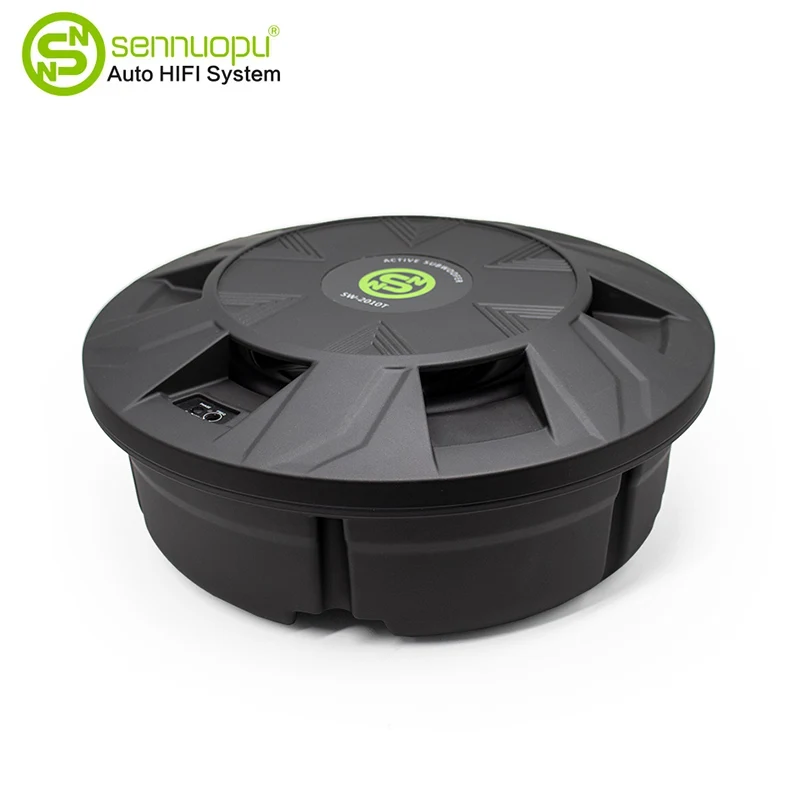
EQ boosts don’t create real low-frequency output if the speakers can’t handle it. Most subwoofers need dedicated power to perform correctly. If you want a simpler route, a compact powered enclosure can combine subwoofer and amp in one unit.
What’s the best subwoofer size for sound quality?
Sound quality is more about enclosure, tuning, and installation than size alone. Many listeners love 10" setups because they balance speed and depth while fitting easily in most vehicles.
Why does my trunk rattle after installing a sub?
Bass reveals weak points in panels and trim. Tighten loose clips, add damping to problem areas (often the license plate and trunk lid), and confirm the enclosure is secured. Clean bass often requires a little vibration control.
Can I keep my factory head unit?
In many cases, yes. You may need a line output converter or an integration solution depending on your vehicle. The goal is a clean signal and correct tuning, not necessarily replacing your dashboard.
Ready to upgrade your bass without guessing?
Tell us your vehicle model, available space, and what you listen to most—and we’ll recommend a Car Subwoofer option that fits your goals and daily routine. If you want a cleaner, fuller sound on every drive, contact us today and let’s build the right setup for you.